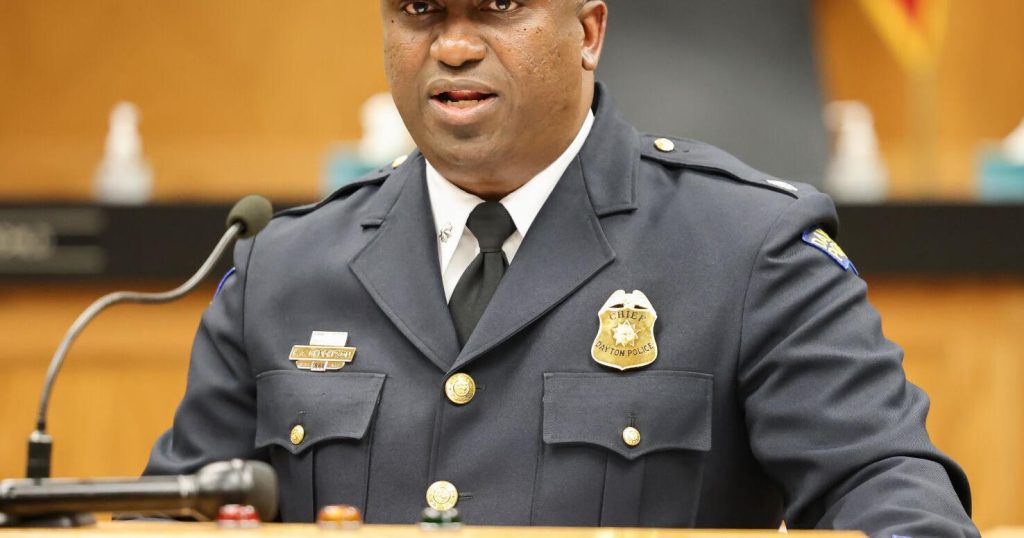
Dayton Police Chief Eric Henderson has stepped into the top job in the city where he grew up, and this article looks at his path, priorities, and the practical challenges ahead in Dayton, Ohio. It covers Henderson’s background, the training and experience he brings, how he plans to tackle crime and community trust, and what the city can expect from the department under his leadership.
Eric Henderson isn’t a headline-chasing outsider; he’s a hometown officer who rose through Dayton’s ranks. His career track reads like an apprenticeship in local policing, with time spent on patrol, in investigations, and leading units that respond to the city’s most pressing problems. That steady climb gives him an intimate sense of Dayton’s neighborhoods, the people who live in them, and the officers who patrol them.
Dayton Police Chief Eric Henderson said he’s trained his whole career to take the lead of his hometown police department. That statement matters because it frames his approach as one built on preparation rather than improvisation. People hear the phrase and expect a chief who values discipline, training, and continuity over flashy, short-lived initiatives.
Henderson’s priorities are practical: reduce violent crime, support patrol officers, and rebuild trust where it’s frayed. He’s signaling a focus on boots-on-the-ground policing while backing it up with training and systems improvements. That balance appeals to residents tired of both reactive chaos and abstract policy debates that never affect safety on neighborhood streets.
On training, Henderson’s record suggests he won’t settle for checkbox exercises. Expect ongoing, scenario-based drills, stronger field mentorship, and attention to de-escalation tied to real-world tactics. That kind of training sends a clear message: officers should go home safe and citizens should feel the department is competent, accountable, and ready for the tough calls.
Staffing and morale are immediate hurdles. Like many midsize cities, Dayton faces recruitment gaps and retention problems as seasoned officers retire or seek other options. Henderson will need to make the department a place where experience is valued and new recruits see a clear path forward, which means better support, predictable promotion tracks, and clearer expectations on and off duty.
Community relationships will shape how effective any strategy becomes. Henderson inherits an environment where trust has been tested by high-profile incidents and everyday frustrations alike. He’s likely to push for more face time between officers and residents, targeted outreach in neighborhoods with chronic issues, and transparent communication when things go wrong.
Data and problem-solving should be part of his toolbox. Using analytics to pinpoint repeat hot spots, partnering with social services to address root causes, and coordinating with city leaders on lighting, blight removal, and youth programs can make enforcement more effective and less reactive. Those moves don’t replace policing; they amplify it by reducing the conditions that breed crime.
Politics will always be present. Dayton’s city leaders and residents will watch budgets, contracts, and public safety performance closely, and Henderson must navigate those pressures without letting politics dictate tactics. That means clear metrics, regular public updates, and a willingness to adjust tactics when evidence shows a different approach would work better.
Expect Henderson to prioritize measurable wins early: cutting shootings in targeted zones, improving response times to violent incidents, and tightening recruitment pipelines. Small, visible improvements build credibility and buy time for deeper reforms. The challenge will be sustaining momentum when progress is slow and setbacks occur — and that’s where steady leadership matters most.
Dayton’s future depends on pragmatic, steady leadership that remembers neighborhoods are more than crime statistics. Henderson’s hometown roots and career training give him a credible platform, but results will depend on execution: well-trained officers, community partnerships that stick, and an administration willing to invest in both immediate response and long-term prevention. That mix is the truest test of whether a chief trained for the job can actually lead the city through it.