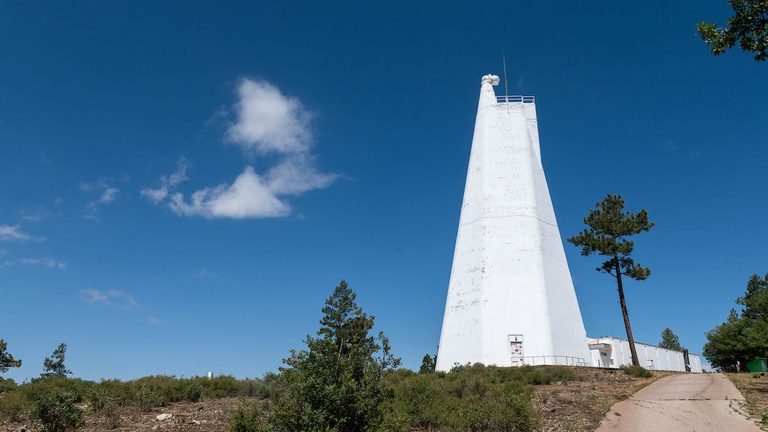
New Mexico residents are pushing to save the nearly 80-year-old Sunspot Solar Observatory in the Sacramento Mountains near Alamogordo. The National Science Foundation announced plans to demolish the site after a liquid mercury leak prompted the cessation of operations.
History and Significance
The U.S. Air Force funded the solar observatory in 1947 to research solar flares and sunspots. The National Science Foundation took over operations in the mid-1970s, and a consortium including New Mexico State University has overseen the visitor’s center and Richard B. Dunn Solar Telescope since 2017.
The telescope was seen as a major scientific breakthrough, with its 250-ton optical system suspended in 120 gallons of liquid mercury. However, the mercury leak in January led to the closure of the campus to the public and the subsequent decision to demolish the site.
Preservation Efforts
Residents, former employees, and state lawmakers are fighting to save the observatory, citing its scientific and cultural significance. Dave Dooling, who worked as the education officer at Sunspot for nine years, is leading the effort to stop demolition. Dooling and a grassroots coalition known as Friends of Sunspot are pushing to pause the demolition until stakeholders can agree on a plan.
Scott McLaughlin, the executive director of Spaceport America, has also joined the effort, recalling his childhood visits to the observatory and considering it part of the Space Valley ecosystem. Rep. Dayan Hochman-Vigil (D-Albuquerque) has had productive conversations with lawmakers representing the area around Sunspot and hopes the National Science Foundation will pause demolition long enough for an alternative to be found.
Original reporting: Las Cruces Sun News (HLL/CB) — read the source article.