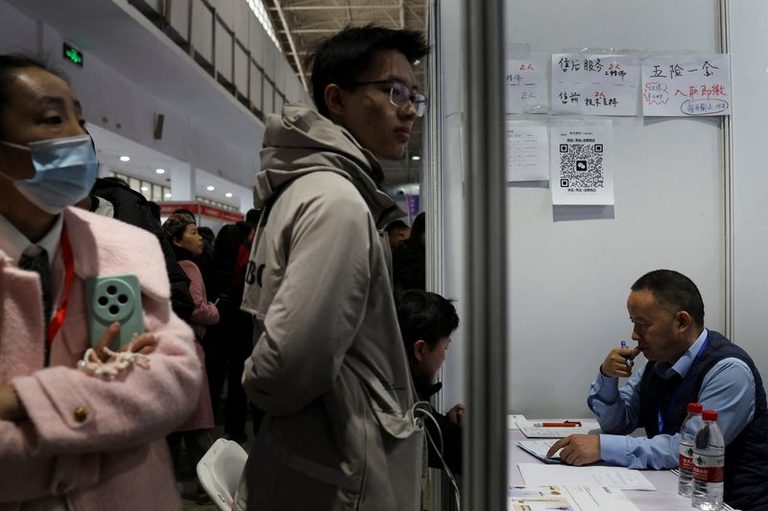
China’s gig economy has become a crucial employment buffer as the property crisis wipes out construction jobs and manufacturers shed workers through automation and cost-cutting. However, this shift has also put a strain on the country’s welfare system, as many gig workers lack access to social insurance and other benefits.
Gig Economy Acts as China’s Safety Net
Analysts say China’s gig economy has become a crucial employment buffer as the property crisis wipes out construction jobs and manufacturers shed workers through automation and cost-cutting. The gig economy has helped to mitigate the income shock of losing a formal job, but it has also heightened long-term risks to an inadequately funded welfare system.
A government adviser said that the rise of gig jobs, where social insurance contributions are not mandatory, heightens long-term risks to an inadequately funded welfare system. The adviser suggested that Beijing should support the formal services industry to create better jobs.
Growing Burden
Central government transfers that plug social insurance budget gaps have roughly trebled over the last decade to about 3 trillion yuan, doubling as a percentage of total expenditure to 10%. A second government adviser said that further taxing gig workers, many of them rural migrants, to reduce the burden, would be ‘highly unreasonable’.
Original reporting: Appleton, WI News Feed (HLL/CB) — read the source article.