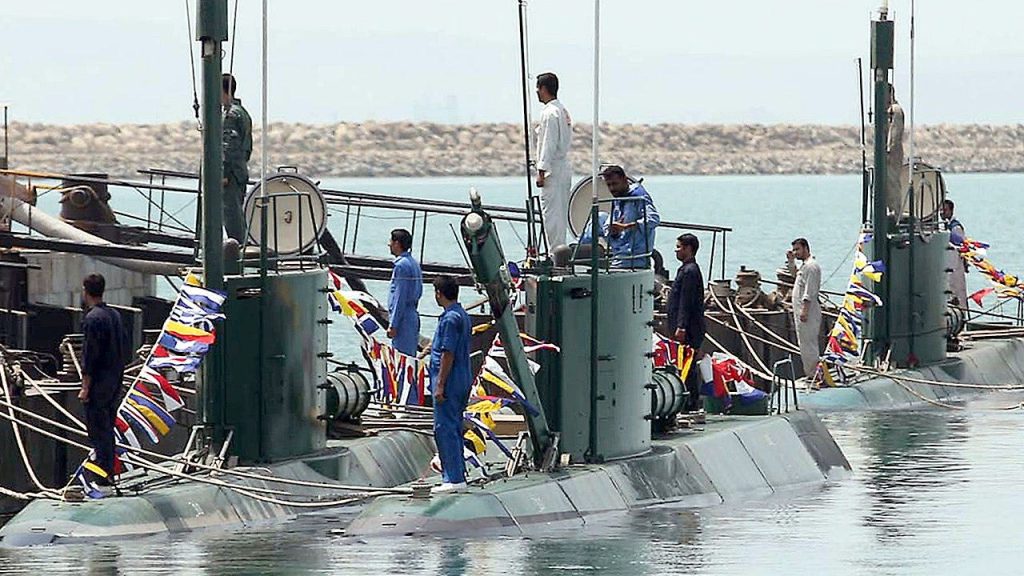
Iran says it has sent Ghadir-class mini-submarines into the Strait of Hormuz, calling them the “dolphins of the Persian Gulf,” and Tehran’s navy chief Rear Admiral Shahram Irani is touting the move as an invisible shield. Analysts including Tom Shugart warn these craft have tight limits, and the U.S. has responded with an Ohio-class ballistic missile submarine port visit to Gibraltar. The standoff has choked commercial traffic, drawn strikes reported by the United Arab Emirates and South Korea, and prompted blunt statements from President Donald Trump that Iran’s navy is “completely obliterated.”
The Iranian claim reads like classic posturing: small diesel-electric boats touted as guardians of a strategic choke point. Tehran is also expanding the zone it claims around the strait, seeking leverage over a waterway that moves much of the world’s oil. Those moves are meant to coerce and to raise the political cost of resistance in capitals from Washington to Seoul.
Those submarines are Ghadir-class, light boats built to work in shallow water and to hide among cluttered littoral environments. The IRGC Navy is said to be the only operator of these vessels, and they serve with the Southern Fleet. In practice, they can sit on the bottom and run quietly for limited stretches, but their endurance and reach are narrow compared with true ocean-going boats.
Defense analyst Tom Shugart lays out the operational reality in simple terms: “Time would be limited, probably a couple of days at the most,” he said. He noted conventional snorkeling to recharge batteries betrays them with sound, and that the snorkel itself can be spotted by radar. “If they run their diesel engines to snorkel and recharge batteries, that could generate sound that could be detected.” “Their snorkel mast projecting from the water could be detected by radars on patrol aircraft or helicopters,” Shugart added.
Those technical limits do not erase the immediate danger to unarmed merchant traffic or to regional stability, but they do shape a Republican view that Iran’s claim is dangerous theater rather than a strategic revolution. Ghadir boats can lay mines, shadow tankers and threaten commercial shipping lanes, and that’s exactly why they matter politically. The correct response mixes deterrence and readiness without panicking into overreaction.
The United States has moved to demonstrate that deterrence. An Ohio-class ballistic missile submarine visited Gibraltar, a port call the Sixth Fleet framed as proof of capability and commitment to NATO partners. Ohio-class boats are a hard fact of seaborne deterrence; they are described as undetectable launch platforms and the most survivable leg of the nuclear triad. That presence signals to Tehran that the U.S. can project depth and permanence where Iran can only muster short-term tricks.
Shugart is blunt on the tactical balance: “While they may be able to sit on the bottom for a while and operate somewhat quietly on their batteries for a while, they have no air-independent propulsion system (AIP) like more modern diesel-electric submarines,” he said. That gap forces periodic snorkeling and makes them vulnerable. His further point lands hard: “eventually have to come up and snorkel. This will make them more vulnerable to detection and destruction.”
Even so, Iran’s campaign has real-world effects: shipping has been disrupted, and commercial tankers have been struck according to reports from the United Arab Emirates and South Korea. Fast-attack craft and mine threats remain part of Tehran’s toolkit, and commercial operators are recalibrating routes and insurance accordingly. The Strait of Hormuz functions like a pressure valve on global energy markets; Iran knows the leverage and uses it to squeeze.
From a Republican perspective, the right play is clear-eyed strength: protect freedom of navigation, keep naval forces forward, and deny Iran the practical gains of coercion. Tom Shugart warns of limits to what the Ghadir fleet can achieve against U.S. warships and submarines, and he does not mince words about the dangers on board those small craft: “But I can say for sure that I wouldn’t want to go out on one in the current environment.” That assessment underlines the need to make Tehran pay for risky provocations.
Iran wants to change facts on the water and reshape the political conversation, but its assets remain tactical rather than strategic. The Ghadir-class may threaten merchant traffic and lay mines, yet they do not erase American naval superiority or the deterrent value of forward-deployed assets. President Donald Trump’s declaration that Iran’s navy is “completely obliterated” captures a blunt political posture that plays well to allies who want to see restraint backed by force.