The U.S. Army confirmed the remains of Spc. Mariyah Symone Collington were recovered in Morocco after she and 1st Lt. Kendrick Lamont Key Jr. went missing during the African Lion exercise. The Moroccan military moved Collington’s remains to the morgue at Moulay El Hassan Military Hospital in Guelmim, Morocco, and U.S. officials say the pair fell off a cliff while hiking off duty. The recoveries followed a massive multinational search that used ships, aircraft, drones and underwater sensors. An investigation into what exactly happened is still underway.
Spc. Mariyah Symone Collington, 19, was identified by U.S. Army Europe and Africa and listed as from Taveres, Fla. She served as an air and missile defense crewmember with Charlie Battery, 5th Battalion, 4th Air Defense Artillery Regiment, 10th Army Air and Missile Defense Command. Collington entered the Regular Army’s Delayed Entry Program in 2023 and began active duty in 2024 after completing training at Fort Sill in Oklahoma. She reported to her unit in Ansbach, Germany, in February 2025 and was promoted to specialist on May 1, 2026.
Her service record included completion of Basic Combat Training and Advanced Individual Training as a 14P air and missile defense crewmember and she earned the Army Service Ribbon. The Army provided those service details while stressing respect for the family’s privacy as remains are prepared for transfer to the United States. The recovery marks the end of a search that involved both U.S. and Moroccan forces and a broad mix of technical assets. Officials are coordinating returns and notifications through military casualty channels.
“Royal Moroccan Armed Forces transported the Soldier’s remains by a Moroccan helicopter to the morgue of Moulay El Hassan Military Hospital in Guelmim, Morocco,” the statement said. That transport was part of a joint effort between Moroccan authorities and U.S. military personnel on the ground. The Moroccan airlift allowed teams to move remains out of difficult terrain where the hikers had fallen. U.S. officials credited Moroccan forces for their assistance throughout the operation.
The two soldiers were first reported missing on May 2 after taking part in African Lion, an annual multinational exercise hosted in Morocco. Their disappearance triggered a search operation involving more than 1,000 U.S. and Moroccan military and civilian personnel, according to a SETAF-AF spokesperson. Recovery work pulled together specialized teams and equipment to cover coastal areas, cliffs and offshore waters where the hikers were believed to have fallen. The investigation into the circumstances is ongoing and officials have not released a full timeline of the events that led to the fall.
Assets used in the search included a U.S. Navy P-8 Poseidon maritime patrol aircraft and multiple unmanned aerial systems, along with thermal and ISR sensors to sweep large areas quickly. The operation also used an unmanned underwater vehicle, side-scan sonar, a Moroccan multibeam echosounder and U.S. Coast Guard drift modeling capabilities to search offshore and along the shoreline. Those tools are standard for complex recoveries where both land and sea factors complicate the search. Planners said the mix of technology and manpower was crucial to locating remains in rugged coastal terrain.
Earlier in the week the military announced the remains of 1st Lt. Kendrick Lamont Key Jr., a 14A Air Defense Artillery officer, had been recovered and were being returned to the United States. Both soldiers reportedly fell from a cliff during an off-duty recreational hike, and military leaders emphasized that accidents can happen even during routine downtime. The families of the fallen have been notified and the Pentagon is managing next steps for repatriation. Local and U.S. authorities will continue to coordinate as forensic work and official reviews proceed.
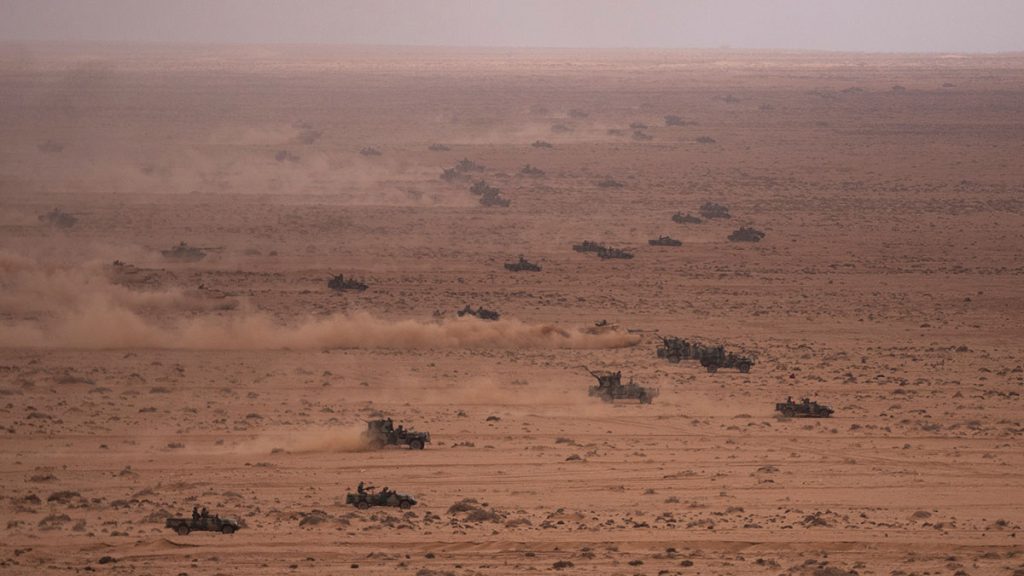
African Lion 26 began in April and stretches across Morocco, Tunisia, Ghana and Senegal, involving more than 7,000 personnel from over 30 nations in a mix of training events. The exercise is U.S.-led and aims to strengthen regional ties and readiness with partnered militaries. Past iterations of the exercise have seen accidents, including a 2012 helicopter crash near Agadir that killed two U.S. Marines and injured two others. Commanders say safety is always a focus but that challenging environments and complex training increase risk.
Military spokespeople asked for patience as the investigation continues and as officials work to bring the remains home with dignity. The focus now is on supporting the families, completing the formal investigative steps and reviewing safety lessons that might prevent similar tragedies. For the units involved back in Ansbach and across U.S. installations, the loss is a sharp reminder of the human cost that can come with service and training far from home.