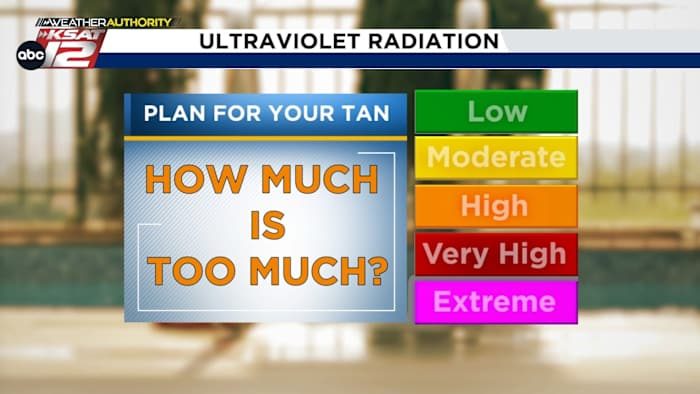
The UV Index is becoming a topic of discussion at pool parties this summer. While some think a higher number is more efficient for tanning, it actually means it’s more dangerous during long exposure times.
What is the UV Index?
The UV Index is a forecasted value of the Sun’s ultraviolet radiation expected for a day. The forecasted number is the maximum value expected in the middle of the day when the Sun is at its peak. In reality, the UV Index varies through the day.
The Environmental Protection Agency (EPA) has broken down UV exposure categories into a scale of 1 through 11 or higher. When the UV Index is High, Very High, or Extreme, sunburn prevention is necessary. Additionally, the EPA recommends individuals avoid time outside between 11 AM and 4 PM when the UV index is a 6 or higher.
Furthermore, a UV Index ranging from 1 to 5 can still pose a health risk when proper protections are not taken. When you tan, the change in your skin color is actually your body’s defense mechanism to prevent further harm from UV radiation. Recurring exposure to UV radiation will cause genetic mutations in skin cells that can lead to skin cancer.
Additional health issues from UV exposure include premature skin wrinkles and a weakened immune system. Variations in the UV Index can be attributed to multiple factors in your location.
Original reporting: San Antonio, TX News (HLL/CB) — read the source article.