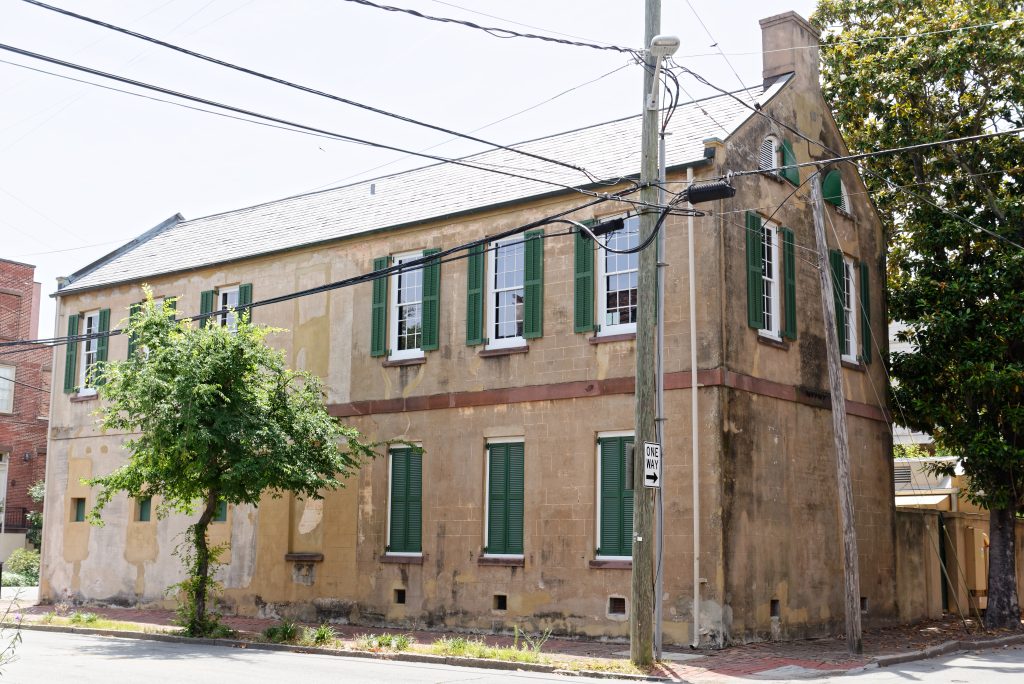
There are historic houses, and then there is the Owens-Thomas House. Tucked along the elegant curve of Oglethorpe Square in Savannah’s landmark district, this Regency-style mansion has been stopping people in their tracks since 1819. I walked through its wrought-iron gate on a warm Tuesday morning, and two hours later I was still there, reluctant to leave.
Designed by English architect William Jay — the same visionary behind several of Savannah’s most admired buildings — the Owens-Thomas House is widely considered one of the finest examples of Regency architecture in the entire United States. And that’s not tourist-brochure hyperbole. The moment you step inside, you understand it immediately. The curved walls, the bridge connecting the second-floor rooms, the skylit staircase that floods the interior with natural light — every detail feels intentional, almost impossibly refined for its era.
But what genuinely sets this place apart from your standard house museum experience is its commitment to telling the full story of the people who lived and worked here. The guided tour doesn’t gloss over the harder truths. The Telfair Museums, which operates the property, has done serious, thoughtful work to document and interpret the lives of the enslaved men and women who maintained this household. The urban slave quarters — among the best-preserved in the American South — are included in the tour, and the interpretation there is handled with real care and depth. You come away with a more complete, more honest picture of antebellum Savannah than most historic sites offer.
The house itself is loaded with original furnishings and decorative arts, many of them acquired by later owner Richard Richardson and the Owens family, who occupied it for decades. The collection includes pieces from the early nineteenth century that feel genuinely rare — not reproductions arranged to suggest a mood, but actual objects with actual histories. The cantilevered porch on the south facade, supported by cast-iron columns, overlooks a beautifully maintained garden and feels like something out of a Jane Austen adaptation.
Marquis de Lafayette famously addressed a crowd from that very porch during his 1825 American tour. Standing there yourself, looking out over the square and the moss-draped oaks beyond, it’s easy to feel the weight of all that history pressing gently against the present.
Tours run regularly throughout the day and are led by knowledgeable, engaging guides who clearly love the subject matter. Plan to arrive at least a few minutes early — the house fills up, especially on weekends. Tickets are reasonably priced, and your admission supports the broader Telfair Museums system, which includes the Telfair Academy and the Jepson Center just a short walk away.
Oglethorpe Square sits in the heart of the historic district, making this an easy addition to any walking itinerary. Grab a coffee nearby, wander over, and give yourself permission to slow down and really look. The Owens-Thomas House rewards that kind of attention generously.