There is a moment, standing at the edge of the Missouri River on Omaha’s north riverfront, when the city falls away and something older and wilder takes its place. The water moves with quiet authority, cottonwood trees line the far bank, and you can almost hear the creak of wooden keelboats pushing upstream. That feeling is exactly what the Lewis & Clark National Historic Trail Visitor Center was built to give you, and it delivers every single time.
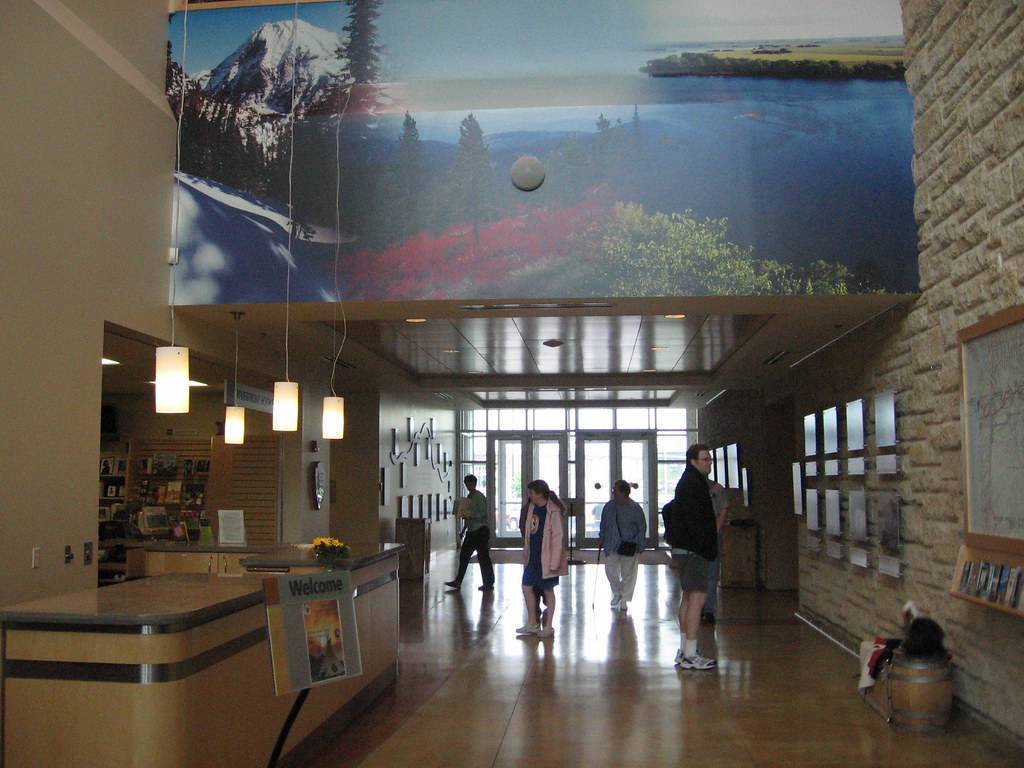
Tucked into the north end of the riverfront near the convergence of Abbott Drive and the river itself, this free National Park Service facility is one of those places that rewards curiosity in the best possible way. It serves as the official headquarters for the nearly 4,900-mile Lewis & Clark National Historic Trail, and it takes that responsibility seriously. The building itself is thoughtfully designed, with large windows framing views of the Missouri and exhibits that pull you deeper into the story the longer you linger.
Inside, you will find interpretive displays that trace the entire arc of the Corps of Discovery expedition launched in 1804. But this is not the dry, glass-case-and-placard experience you might expect. The exhibits are layered and engaging, weaving together the perspectives of Meriwether Lewis and William Clark alongside the Indigenous nations who had lived along the river for centuries before the expedition ever arrived. That balance matters, and it gives the whole experience a richness that stays with you well after you leave.
The park rangers here are genuinely knowledgeable and enthusiastic in the way that only people who truly love their subject can be. Ask them about the Council Bluff site just upstream, where Lewis and Clark held their first formal council with Native leaders in August 1804, and you will get a conversation worth having. They can also point you toward the self-guided outdoor trail that winds along the riverbank, offering quiet views of the Missouri and interpretive signage that contextualizes what you are seeing in historical terms.
The location makes it easy to combine with a walk along the nearby riverfront path or a visit to one of the local cafes in the River’s Edge neighborhood. Parking is straightforward, admission is completely free, and the visitor center is open year-round, though hours shift by season, so a quick check of the NPS website before you go is always a good idea.
What makes this place special is its scale of ambition matched with its sense of humility. It tells an enormous American story from a precise and meaningful geographic vantage point, and it does so without noise or spectacle. Sometimes the best travel experiences are the ones that make you think, and this one does exactly that. Come for the history. Stay for the river. Leave with a story of your own to tell.