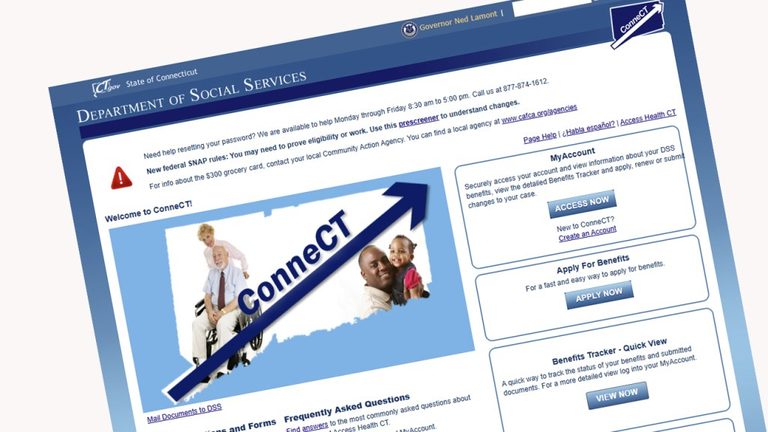
Connecticut’s Department of Social Services (DSS) has implemented an automated eligibility system to manage public benefits. However, this system is causing problems for families who rely on these benefits. The system is designed to be more efficient, but it’s often leaving families without the help they need.
Automated Gatekeeping
The automated system is supposed to make it easier for families to access benefits, but it’s often doing the opposite. The system is set up to automatically close cases if there are any issues with the application, such as a missing document or a missed deadline. This can be devastating for families who are already struggling to make ends meet.
The system also relies on digital access, which can be a barrier for many families. Not everyone has access to a working phone, internet, or the digital literacy needed to navigate the system. This can lead to missed renewals, frozen uploads, and other issues that can cause benefits to be cut off.
Lack of Human Judgment
The automated system is also limiting the ability of caseworkers to use their judgment when working with families. The system is set up to prioritize speed and efficiency over care and accuracy. This can lead to families being denied benefits they are eligible for, simply because the system is not designed to handle complex cases.
The use of chatbot-style support and generative AI-ready tools can also make it seem like the system is more helpful than it actually is. These tools can keep people stuck in self-service loops, where system errors remain the client’s problem.
The Connecticut DSS should prioritize labor protections, transparency, public oversight, limits on automated decision-making, appeal rights, data minimization, and privacy safeguards. The state should also disclose the use of generative AI or predictive analytics and prohibit platform analytics from replacing human judgment.
Original reporting: The Connecticut Mirror — read the source article.