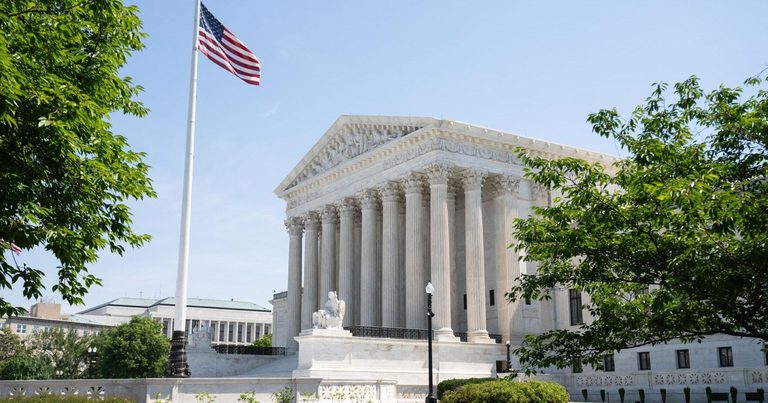
Chief Justice John Roberts has long advocated for a more powerful presidency, and on Monday, he led a majority of the Supreme Court to reverse a 1935 precedent that had limited the president’s authority to fire the heads of independent agencies.
Background
Roberts, who has served as chief justice since 2005, has consistently pushed for an expansion of presidential power. In a 1983 memo to the White House counsel, he argued that the time was ripe to reconsider the constitutional anomaly of independent agencies.
The case, which involved the Federal Trade Commission, centered on the president’s ability to fire the heads of independent agencies. The Supreme Court’s decision gives the president more authority to remove these officials, potentially allowing for greater control over the agencies.
Implications
The ruling has significant implications for the regulatory sphere, as independent agencies play a crucial role in areas such as consumer protection and public health. Critics argue that the decision could lead to increased instability and undermine the independence of these agencies.
Justice Sonia Sotomayor, who delivered a dissenting opinion, emphasized the importance of insulating independent regulators from presidential pressure. She argued that the decision would give the president too much power and potentially undermine the system of checks and balances.
Original reporting: KTBS 3 (Shreveport) — read the source article.