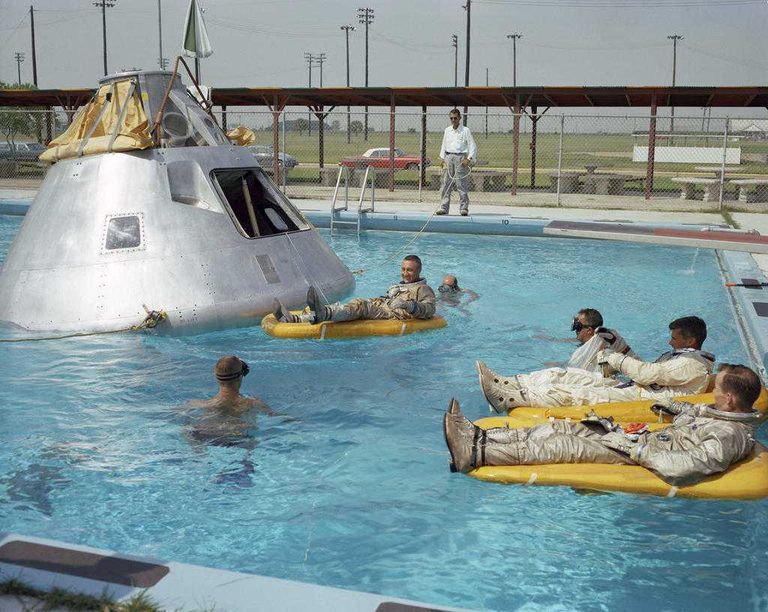
The United States’ space exploration journey began in the late 1950s with the construction of the nation’s first operational spaceport at Cape Canaveral, Florida, as part of efforts to counter the Soviet Union’s advancements in space during the Cold War.
Landing on the Moon
Landing on the moon became the ultimate goal for the United States, as President John F. Kennedy famously declared, ‘We choose to go to the moon in this decade and do the other thing, not because they are easy, but because they are hard.’ The Mercury missions from 1959 to 1963 paved the way, with Alan Shepard becoming the first American in space on May 5, 1961.
The Gemini program followed, with teams of two astronauts conducting groundbreaking missions from 1962 to 1968. These included the first American spacewalk by astronaut Ed White and spacecraft docking maneuvers with a lunar lander, all under the backdrop of America’s determination to surpass the Soviet Union.
Apollo Program
The Apollo program culminated in the historic Apollo 11 mission. ‘Five, four, three, two, one, zero… all engines running. Liftoff – we have a liftoff,’ the announcer declared as the spacecraft launched. Four days later, the world witnessed Neil Armstrong’s iconic words: ‘One small step for man… one giant leap for mankind.’
Now, the Artemis program aims to take America’s lunar ambitions further, with plans to not just land on the moon but to build a permanent base on its surface.
Original reporting: WESH Orlando — read the source article.