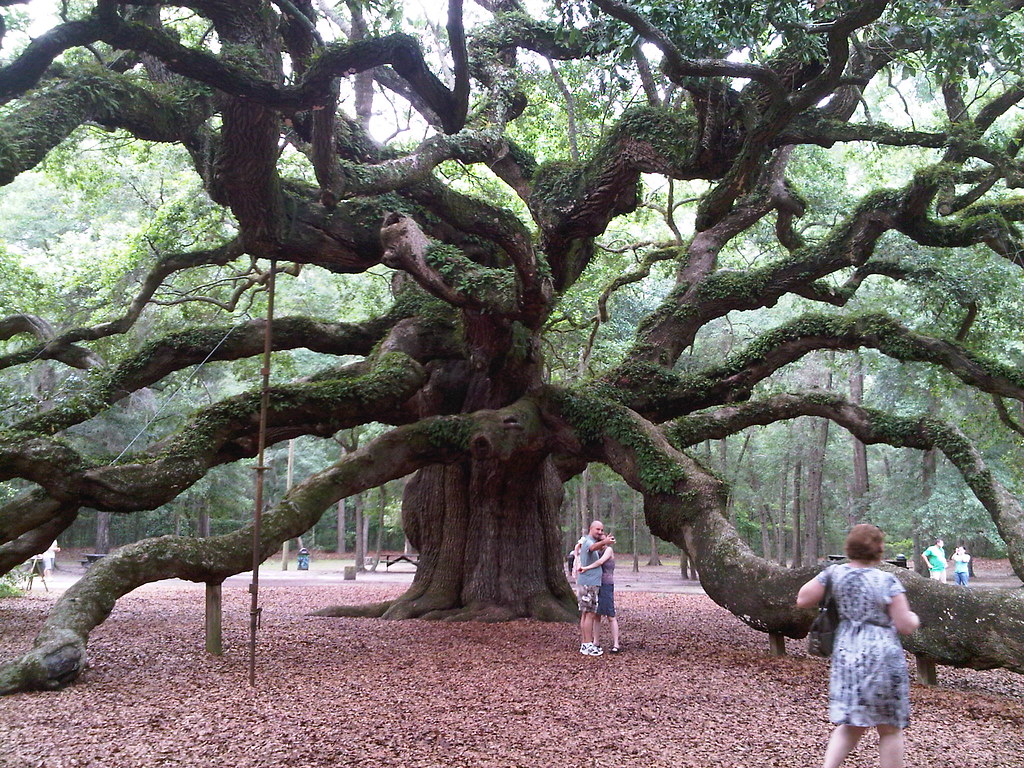
There are moments in travel that stop you cold — not because of a photograph you saw beforehand or a review you read, but because the real thing simply exceeds every expectation. Standing beneath the Angel Oak Tree on Johns Island is exactly that kind of moment. I walked into the small park on a warm Tuesday morning, rounded a bend in the path, and genuinely gasped. I am not a gasper by nature, but this tree demands it.
The Angel Oak is a Southern live oak estimated to be somewhere between 400 and 500 years old, though some researchers believe it could be even older. It stands about 65 feet tall, which sounds modest until you see the limbs — massive, cathedral-arching branches that stretch outward in every direction, some so heavy they dip down and touch the ground before curling skyward again. The canopy shades an area of roughly 17,200 square feet. Standing inside that shade feels less like standing under a tree and more like stepping inside a living, breathing building that has been under construction for half a millennium.
The tree is located at 3688 Angel Oak Road on Johns Island, which sits just southwest of downtown Charleston — about a 25-minute drive across the James Island Connector and out through the quiet, moss-draped back roads that make this part of the Lowcountry feel like a world apart. The surrounding area still has working farms, roadside produce stands, and the kind of unhurried pace that downtown Charleston occasionally forgets it once had. The drive out is worth savoring on its own.
Admission to the Angel Oak Park is completely free, which makes it one of the most remarkable no-cost experiences in the entire region. The park is managed by the City of Charleston and is open Monday through Saturday from 9 a.m. to 5 p.m. and Sunday from 1 to 5 p.m. Arrive early on weekends if you want a few quiet minutes with the tree to yourself — by midmorning it tends to draw a steady crowd of visitors, photographers, and school groups, all of them equally wide-eyed.
What makes Angel Oak particularly special beyond its sheer physical presence is the sense of time it conjures. This tree was already old when the American colonies were being established. It has outlasted wars, hurricanes, and centuries of change along this coastline. The gnarled, silver-gray bark carries the kind of texture that makes you want to reach out and press your palm flat against it, which visitors are gently encouraged not to do — the root system is protected by a roped perimeter to keep the soil compacted and the tree healthy for generations to come.
Photographers will want to bring a wide-angle lens and arrive in the golden hour just after the park opens. The morning light filters through the Spanish moss and the layered canopy in a way that is genuinely painterly. Families with children will find the sweeping low branches and the cathedral-like atmosphere completely enchanting — kids instinctively slow down here, which is its own kind of magic.
After your visit, Johns Island has plenty of reason to keep you lingering. Drive a few minutes down Maybank Highway and you will find Tattooed Moose for a cold beer and a duck club sandwich, or head toward the waterfront for views of the Stono River. The island has its own quiet culinary scene and a growing number of local farms that welcome visitors.
But honestly, the tree is the destination. No checklist of Charleston highlights feels complete without it. The Angel Oak is not a tourist attraction so much as it is a reminder — that some things in this world are simply ancient, enormous, and worth protecting. Go see it. Then go back and see it again in a different season. It earns every visit.