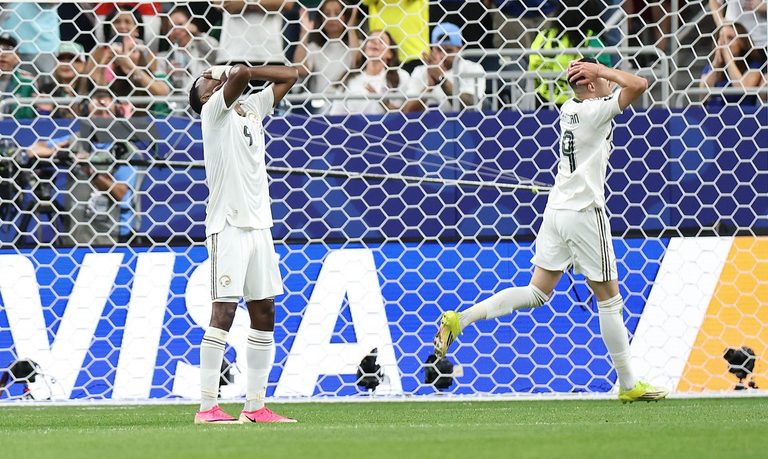
Gulf countries like Saudi Arabia and Qatar have poured a fortune into soccer and infrastructure, but experienced unceremonious exits from the World Cup, proving that big money doesn’t guarantee success on the sport’s biggest stage.
Saudi Arabia’s Early Exit
Saudi Arabia is out at the earliest point, finishing at the bottom of a group that included tiny Cape Verde, the third-smallest nation ever to compete on this stage and into the knockouts for the first time.
By signing the likes of Cristiano Ronaldo, Neymar, and Karim Benzema as part of a spectacular recruitment drive in recent years, Saudi Arabia has been a major disruptor of club soccer. However, on the international stage, it still has a long way to go, eight years out from hosting the World Cup in 2034.
Qatar’s Disappointing Performance
Qatar, the host four years ago, is also on its way home after just three games, as are the other Gulf nations, Iran and Iraq. Compared to the success of African teams at this World Cup, with nine out of 10 advancing to the round of 32, Gulf nations are struggling mightily to make their mark.
A goalless draw against Cape Verde ended Saudi Arabia’s hopes of advancing from the group phase for the first time since 1994.
“It was not what we wanted because when playing in such a match against a team that is more or less the same level as us, our performance was not good. So this gives rise to concern,” Saudi coach Georgios Donis said.
Focus on Development
Qatar made history with its first point at a World Cup, scoring a dramatic late equalizer against Switzerland. However, it was another disappointingly early exit after it was eliminated just two games into its home tournament in 2022.
“I think that they show that at least we were able to compete in these kind of matches,” coach Julen Lopetegui said.
The appointment of Lopetegui — the former Spain and Real Madrid coach — is evidence of the type of investment Qatar has made to try to boost its performance on the global stage.
Focus on development of homegrown talent is clear as 2034 approaches. Star signings from overseas have slowed, and some big names, including Neymar, have departed. U.S. Soccer’s sporting director Matt Crocker was lured away to head up talent development in Saudi Arabia, and youth investment is said to have doubled over the past three years.
Original reporting: NBC4 Los Angeles — read the source article.