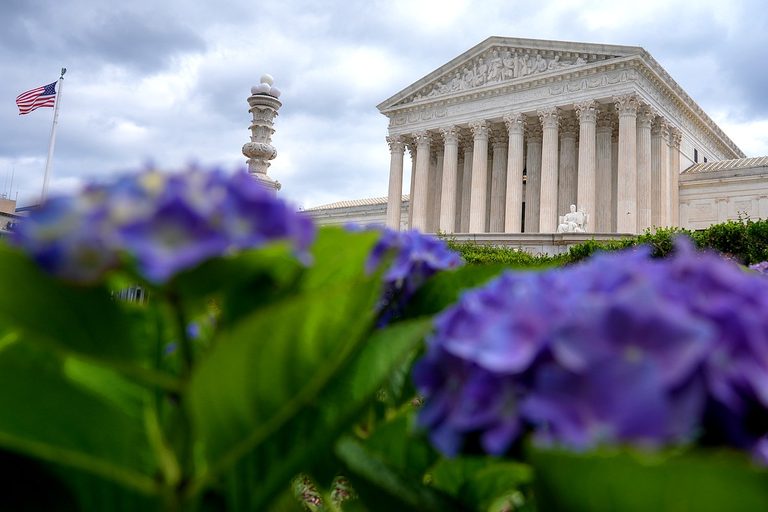
The Supreme Court has overturned a lower court order blocking the Trump administration’s policy of limiting the number of people who could apply for asylum each day at the U.S.-Mexico border. The policy, known as metering, was first used under the Obama administration and expanded during President Donald Trump’s first term.
Background
The policy allowed customs officers to limit the number of asylum seekers who could apply for asylum each day, citing maximum capacity in holding cells at ports of entry. However, official data showed that these claims were often refuted, and many asylum seekers were left waiting in Mexico, exposed to violence, heat, and cold.
The Trump administration argued that metering is a critical tool used by presidents of both parties to secure the southern border. The administration claimed that people turned away at the border could come back later, though lines were often thousands of people long when the policy was in place before.
Supreme Court Decision
The Supreme Court’s conservative majority agreed with the Trump administration, stating that a guest does not arrive in a house when they knock on the front door. Justice Samuel Alito wrote that immigration agents do not have to let people apply for asylum if they have not arrived in the country.
However, attorneys for people seeking asylum argue that the law has long meant that anyone arriving at a port of entry should be screened, and blocking arrivals disregards the nation’s ideals. Justice Sonia Sotomayor dissented from the bench, saying that the majority’s opinion regrettably and tragically extinguishes the light of the torch of the Statue of Liberty.
The decision could also give people a perverse incentive to enter the country illegally if they cannot count on being able to legally apply for asylum at a port of entry. The Supreme Court’s decision is one of several immigration suits the court is considering this term, including Trump’s push to restrict birthright citizenship.
Original reporting: Texarkana Gazette — read the source article.