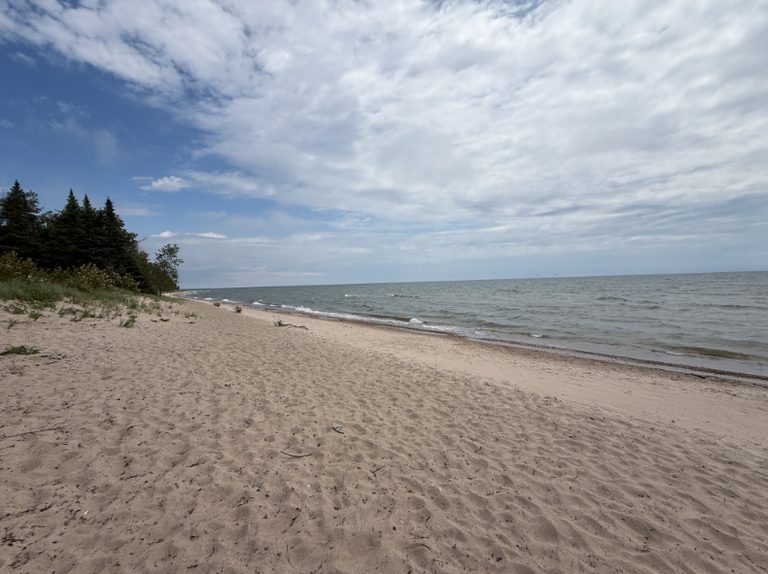
A Door County beach remains closed after it tested high for bacteria. The closure comes as the busy tourism season is underway in Door County, Wisconsin.
Beach Closures a Common Occurrence
Door County has more than 50 public beaches, and the closure of Clay Banks #2 Beach is not expected to be the last of the season. According to Door County Public Health Environmental Health Specialist Allie Reckelberg, the beach was closed after the water tested high for bacteria, with levels exceeding 1,000 most probable number in 100 milliliters of water.
Reckelberg stated that "it takes a lot to get up to that 1,000, but when it does we really want to make sure that that beach is closed just with all the negative health effects associated with swimming and bacteria contaminated water for people and pets and things like that too."
Door County Public Health has worked with UW-Oshkosh and the DNR to test bacteria levels in the water for over 20 years. The beach closures, which usually only last a couple of days, are a very dynamic situation.
Jon Jarosh with Destination Door County noted that the closures are just part of doing business, and with dozens of beaches in the county, there are always alternative options for tourists. Jarosh said, "They've been testing beaches now, a very rigorous testing now, but for the last 20 some years. And so it's shut down for a day or so and then they'll usually open up. But with 53 different beaches up here, there's one not too far away. If you can't get to the one that you, that you maybe wanted to be at."
In addition to online resources on the DNR website that list beach closing and advisories, Door County has also invested in beach water quality signs. Operated through an app and located at nearly a dozen places in the county, the signs can easily be updated to reflect the current conditions.
As public health officials advise, "When in doubt, stay out!" of the water to avoid any potential health risks associated with bacteria contaminated water.
Original reporting: Appleton, WI News Feed (HLL/CB) — read the source article.