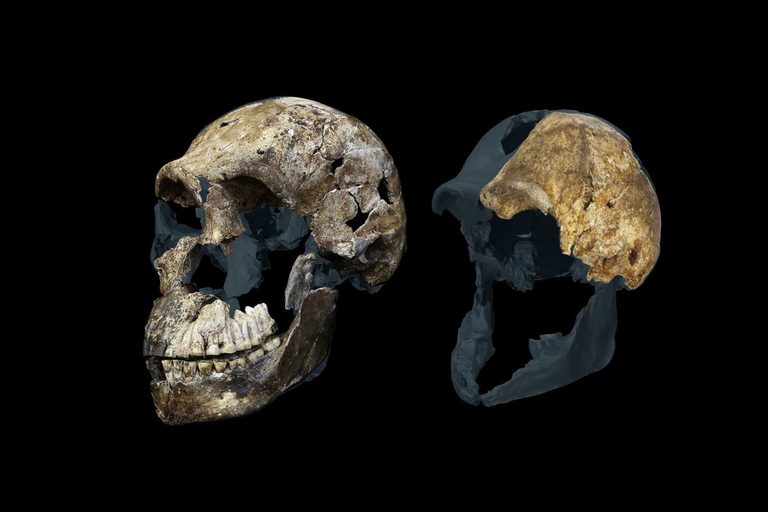
Humanlike fossils have emerged from the deep and twisting caverns of the Rising Star cave system in South Africa over the past decade, revealing a puzzling species of hominin. Now, new findings on the sex of individuals whose remains were discovered there are giving researchers a fresh but perplexing perspective on this oddball human relative.
The Discovery
In 2015, scientists first described a tiny and puzzling species of hominin from an unusually rich cache of fossils found at a site known as Dinaledi Chamber within the cave system. Despite having a brain not much bigger than a chimp, researchers hypothesized that Homo naledi, as the species was named, deliberately buried its dead in the confines of the cave.
The latest research adds another layer of mystery: Scientists have recovered ancient proteins from teeth representing 20 individuals found at the site and determined that all the teeth came from females. Molecular scientist Palesa Madupe led the research while working at the Globe Institute at the University of Copenhagen.
Implications
The absence of male markers in the tested remains could be explained by an amelogenin-Y gene that may have mutated or have been deleted over time. Enrico Cappellini, a senior author of the new study, noted that it would be very unlikely for the gene to have been deleted among even half of the 20 individuals studied or for an entire population.
Ryan McRae, a paleoanthropologist at the Smithsonian National Museum of Natural History, said that the Rising Star site and Homo naledi are so interesting and abnormal that they would always inspire scientific and popular curiosity and intrigue.
Original reporting: KTVZ (Central Oregon) — read the source article.