A three‑judge panel of the 4th U.S. Circuit Court of Appeals issued a ruling Tuesday that curtails a Trump‑era immigration‑enforcement policy at eight houses of worship. The panel found the policy likely violates the Religious Freedom Restoration Act, protecting the ability of congregations to practice faith without fear of federal immigration actions.
Case background
The lawsuit was brought by eight worship sites representing three faith traditions—Quaker, Sikh and the Cooperative Baptist Fellowship. Plaintiffs argued that the Department of Homeland Security’s (DHS) policy, adopted after the Republican administration returned to the White House in January 2025, would chill attendance and impede ministry to immigrant communities.
Court’s reasoning
Writing for the panel, Circuit Judge Barbara Milano Keenan noted that DHS had explicitly stated it intended to target houses of worship in future immigration actions. She cited a January 2025 agency spokesperson’s comment that people could no longer “hide in America’s schools and churches to avoid arrest,” indicating a real and substantial threat to religious gatherings.
Judges Pamela Harris and G. Steven Agee joined the opinion. The court limited its decision to the Religious Freedom Restoration Act claim and declined to rule on First Amendment issues.
Impact of the injunction
The ruling upholds a preliminary injunction issued in February 2026 by U.S. District Judge Theodore Chuang in Maryland, which required DHS to follow the 2021 guidance that limited enforcement in “protected areas” such as places of worship and religious study. The 4th Circuit’s decision does not extend to other protected locations identified in the earlier guidance, such as shelters or hospitals.
Responses
Skye Perryman of the liberal legal group Democracy Forward, which represented the plaintiffs, said the decision reaffirms that the administration cannot force people of faith to abandon ministries or worship under the threat of indiscriminate enforcement.
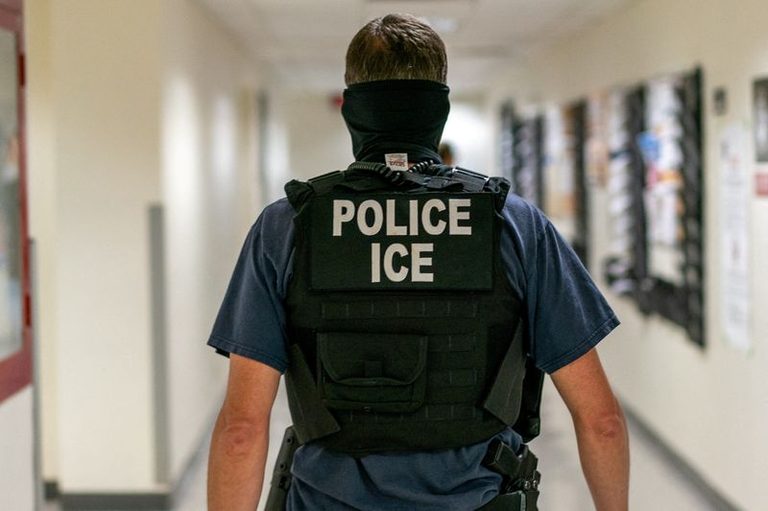
A DHS spokesperson responded that Immigration and Customs Enforcement does not target places of worship, but added that if a “dangerous illegal alien felon” fled into a worship site, an arrest could be made to protect public safety.
Policy context
The Trump administration rescinded a 2021 policy from the previous Democratic administration that required agents to seek approval before conducting enforcement actions in protected areas. The new guidance gave agents “discretion along with a healthy dose of common sense” when deciding where to act.
While the court’s order narrows the scope to the eight plaintiff congregations, it signals that federal immigration enforcement must be balanced against constitutional and statutory protections for religious exercise.
Original reporting: Appleton, WI News Feed (HLL/CB) — read the source article.