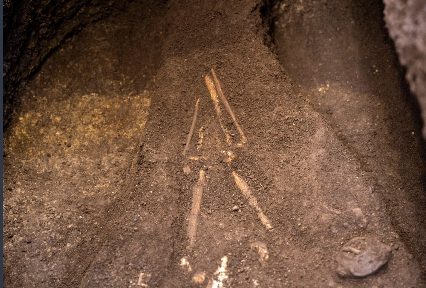
A recent archaeological discovery in Mesoamerica has uncovered 3,000-year-old human remains, potentially one of the oldest pre-Hispanic burials in the region. The remains were found face down and will undergo radiocarbon dating to determine their age. DNA analysis will also be carried out to determine the person’s sex.
Significance of the Discovery
The find could become one of the oldest pre-Hispanic burials in Mesoamerica and would provide new information about the populations that inhabited this region more than two thousand years ago. The site may contain burials similar to those uncovered at the Chalchuapa archaeological site in western El Salvador, where archaeologists unearthed the remains of 33 people in the 1970s.
Last year, archaeologists said they discovered an ancient altar in a jungle in Guatemala that was apparently used for human sacrifices, “especially of children.” In 2015, scientists in Brazil announced they discovered evidence of human decapitation that dates back to over 9,000 years, making it the oldest case ever seen in the New World.
Original reporting: KTSA News/Talk (San Antonio) — read the source article.