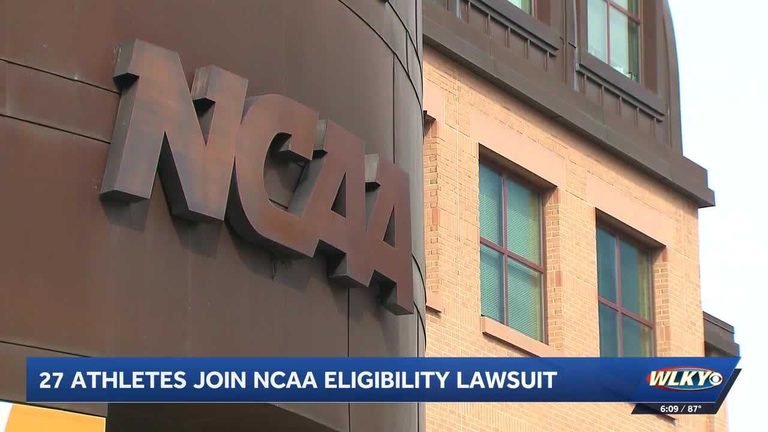
Jefferson County, Ky. – A growing group of student‑athletes has taken legal action against the National Collegiate Athletic Association (NCAA) in hopes of restoring a fifth year of eligibility that they say was unjustly denied under the organization’s new five‑season rule.
New plaintiffs join the case
On Thursday, a Jefferson Circuit Court filing listed 27 additional plaintiffs who have signed on to the existing lawsuit. Among them is former University of Louisville men’s basketball transfer Seth Trimble, who transferred to the school after beginning his collegiate career elsewhere.
What the athletes are seeking
The plaintiffs contend that the NCAA’s rule, which limits athletes to five seasons of competition, effectively excludes many high‑school graduates from the class of 2022. They argue the policy was applied retroactively and without proper notice, violating their rights to fair competition and education.
Specifically, the athletes are asking the court to:
- Restore their eligibility for a fifth season of competition;
- Remove existing transfer restrictions that limit their ability to move between schools;
- Declare the NCAA’s rule enforcement unlawful under applicable state and federal statutes.
Legal background
The lawsuit, originally filed earlier this year, challenges the NCAA’s authority to impose blanket eligibility limits that affect student‑athletes’ academic and athletic futures. The plaintiffs claim the rule conflicts with principles of due process and equal protection, arguing that it disproportionately harms those who transferred or took a red‑shirt year.
Attorney Michael J. O’Connor, representing the group, said, “These young men and women are being denied the opportunity to complete their college careers because of a rule that was never intended to be applied retroactively. The court must intervene to protect their rights.”
Potential impact on college sports
If the court rules in favor of the athletes, the decision could set a precedent for other student‑athletes across the nation who feel similarly constrained by the NCAA’s eligibility policies. A favorable ruling might force the NCAA to revise its regulations, offering greater flexibility for transfers and extended playing time.
Conversely, a dismissal could reinforce the organization’s current stance, prompting schools and athletes to adapt to the existing framework or seek alternative avenues, such as professional leagues or overseas competition.
Community response
Local fans and families have expressed support for the plaintiffs, emphasizing the importance of education and fair treatment. “My son wants to finish his degree and play his final season,” said Louisville resident Karen Mitchell, whose daughter is among the athletes. “We need rules that help, not hinder, student‑athletes.”
The case also draws attention to broader discussions about student‑athlete rights, transfer portals, and the balance between amateurism and professional opportunities in college sports.
Next steps
The court has not set a hearing date yet, but both sides are preparing for a potentially lengthy legal battle. The NCAA has declined to comment on the specifics of the lawsuit, stating only that it remains committed to “ensuring a fair and competitive environment for all member institutions.”
As the legal process unfolds, the 27 new plaintiffs hope their participation will amplify the call for reform and ultimately secure the chance to compete for a full five seasons.
Original reporting: WLKY Louisville — read the source article.