Yosh’s Ramen on East Johnson Avenue operates on a philosophy its owner, Josh Yoshida, has never bothered to explain in a mission statement. He doesn’t have one. What he has is a stockpot that starts at four in the morning and a narrow dining room that fills up by noon on weekdays.
Yoshida moved to Jonesboro from Little Rock about six years ago, following a spouse who took a job at the hospital. He’d spent years working in Japanese restaurant kitchens, never as the head, always at the edge of the line where the unglamorous labor happens — straining broth, portioning tare, breaking down pork bones. When he opened his own place in 2020 in a converted sandwich shop off the Strip, most people assumed it wouldn’t last eight months. The kind of ramen he was making — tonkotsu cooked for twelve or more hours, not a packet in sight — wasn’t exactly a proven commodity in northeast Arkansas.
It lasted. It more than lasted.
On a Thursday lunch, the room holds maybe thirty people across mismatched chairs and four bar stools along the front window. Yoshida works the small kitchen with one cook, usually his nephew, who goes to ASU and pulls shifts between classes. Orders come in handwritten on paper slips. There’s no app, no online ordering, no QR code at the table. The menu board above the counter lists six ramen options, a handful of small plates, and a rotating daily special that Yoshida chalks up each morning depending on what came in fresh.
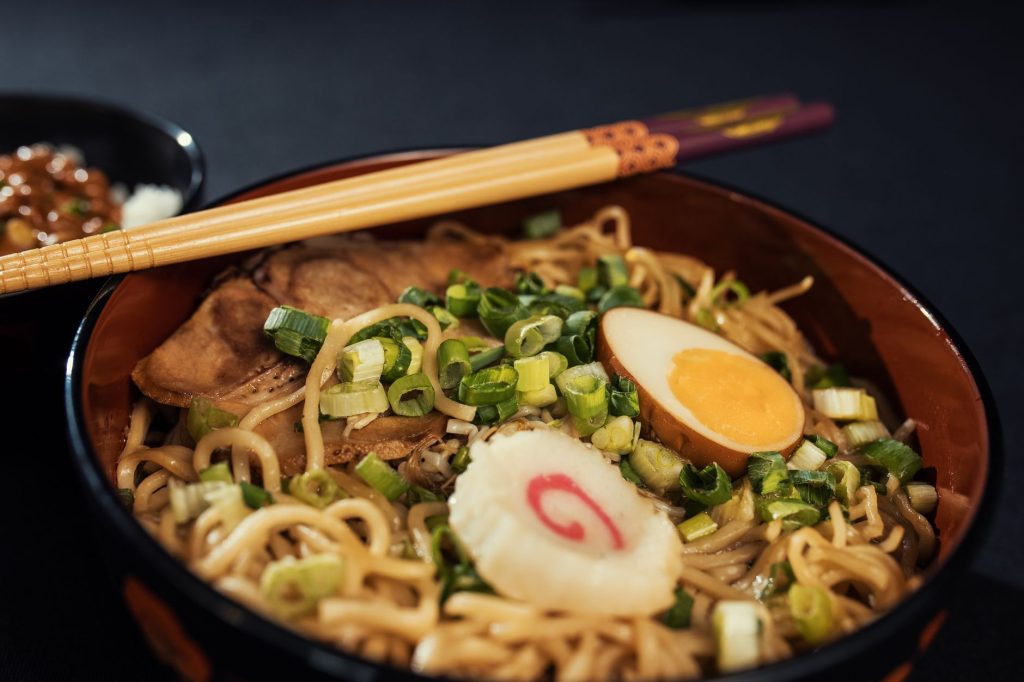
The tonkotsu is the anchor. The broth is opaque and deeply savory without crossing into salt-heavy territory, topped with two slices of chashu pork that have been braised low and long until they give at the gentlest pressure of chopsticks, a soft-boiled egg with an orange center, nori, bamboo shoots, and green onion. It runs about thirteen dollars. The shoyu is lighter, cleaner, and suits the summer heat better than you’d expect a hot bowl of noodles to. The spicy miso — only available Friday and Saturday — sells out before two o’clock most weeks.
The small plates are worth noting. The karaage arrives in a brown paper-lined basket, chicken thighs fried to a shattering crust with a interior that stays almost juicy. The gyoza are pan-seared on one side only, the way Yoshida insists is correct, and they come with a dipping sauce he makes himself from rice vinegar, soy, and something he declines to specify.
Yoshida isn’t a talker during service, but catch him during the ninety-minute gap between lunch and dinner prep and he’ll describe in careful detail why he uses Sun Noodle’s fresh ramen over dried, and why the fat content of the pork back bones he orders from a supplier in Memphis matters more than most diners would ever think to ask about. He talks about the food the way someone talks about a thing they’ve thought about for a long time and still find interesting.
The restaurant is closed Sunday and Monday. Dinner runs until nine, though Yoshida closes the kitchen when the broth runs out, which on busy nights can happen by eight. Cash is preferred, though he keeps a card reader behind the counter for those who ask. Parking is street-side or in the small lot behind the building shared with a tax office.
It’s the kind of place that earns regulars quietly, without fanfare, and keeps them because there’s genuinely nothing else like it in the area.