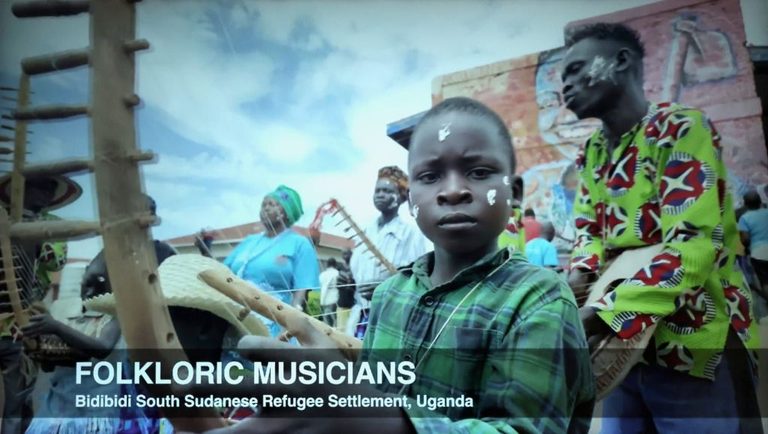
The Yale Institute of Sacred Music in New Haven is presenting Interwoven: Sounds and Visions from the World’s Refugee Camps through Dec. 3. Organized by the nonprofit Artolution, the exhibition features music, paintings, textiles and mixed‑media pieces created by displaced people from Myanmar, Syria, Afghanistan and South Sudan. Local visitors can experience the work in person, hearing the rhythms of a South Sudanese youth band and viewing collaborative murals that blend cultural symbols from multiple refugee communities.
Art as a Bridge Across Borders
Artolution describes its mission as using collaborative art‑making to strengthen connections among communities facing crisis. The show’s placards explain how each piece was born out of shared creative processes: a Rohingya drawing of three golden seahorses symbolizes water as a source of life; a joint canvas titled “Rohingya and Syrian Peacock” links Syrian artists in Jordan’s Azraq camp with Rohingya creators in Bangladesh; and a mixed‑media work called “The Shoes and Instruments of the Past and Present” juxtaposes traditional South Sudanese drums with flip‑flops, underscoring music’s universal call for freedom.
One of the most striking installations, Fabric of Women’s Resilience, weaves together contributions from Rohingya, Syrian, Afghan and South Sudanese women. The artwork highlights stories ranging from maternal‑health initiatives in Bangladesh to efforts to keep girls in school after childbirth in Jordan, and personal narratives of child marriage from an Afghan refugee mother in Greece. The piece underscores the power of storytelling to unite diverse women and advocate for equity.
A Local Perspective on Global Suffering
While the exhibition radiates joy and hope, it also raises a question for New Haven audiences: does the focus on artistic expression obscure the brutal realities that forced these individuals to flee their homelands? Critics note that the show offers little visual reference to the violence in Myanmar, Syria, Afghanistan or South Sudan. Yet supporters argue that art can provide a compassionate entry point for viewers who might otherwise feel overwhelmed by graphic depictions of war.
Artolution’s approach mirrors a broader conversation in the arts about how to balance aesthetic celebration with honest representation of trauma. Filmmaker Hubert Sauper’s 1997 documentary Kisangani Diary presents an unflinching portrait of Rwandan refugees starving in the Congo, offering a stark contrast to the hopeful tone of Interwoven. Both works illuminate different facets of the refugee experience, reminding us that no single medium can capture the full scope of suffering.
Why New Haven Should Pay Attention
New Haven’s own immigrant and refugee families can see reflections of their journeys in the exhibition, fostering a sense of belonging and community solidarity. The show also aligns with the city’s longstanding commitment to cultural diversity and faith‑based outreach, echoing the values of compassion and service that many local churches uphold.
Visitors are encouraged to explore the exhibition’s interactive elements, listen to the live performances scheduled throughout the month, and consider how artistic collaboration can build bridges between disparate cultures. By highlighting the resilience of displaced peoples, Interwoven offers New Haven residents a chance to engage with global humanitarian issues while celebrating the creative spirit that unites us all.
Original reporting: New Haven Independent — read the source article.