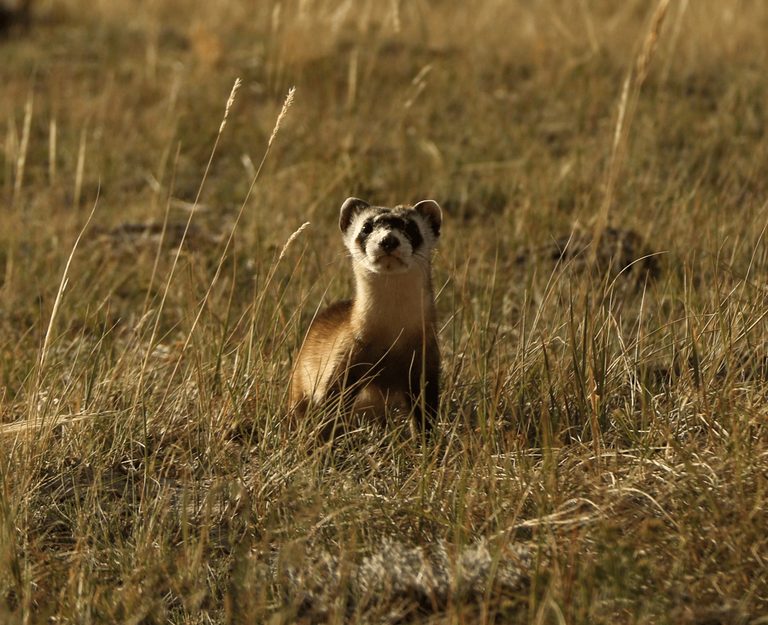
Wyoming Game and Fish Department biologists say the black‑footed ferret, a once‑presumed‑extinct species, was not detected during recent surveys of the historic reintroduction site near Meeteetse. Small carnivore specialist Andy Gygli reported that staff spent several hundred hours searching 4,000 to 5,000 acres but saw no ferrets.
Recent history and challenges
The Meeteetse foothills in the Absaroka Range were the cradle of the species’ rescue in the 1980s. After a three‑decade absence, ferrets were re‑released in 2016, with additional captive‑raised animals added in 2022. However, repeated outbreaks of sylvatic plague in 2018, 2019 and 2023, combined with severe drought, have driven numbers down.
Plague reduced the local ferret count to a single confirmed animal in 2020. A brief rebound occurred after the 2022 releases, but another plague event in 2023 again devastated the population. By 2025, only one ferret was spotted during a spotlight survey; this summer none were found.
Impact of drought on prey
Drought in the Bighorn Basin has also harmed prairie dogs, the ferrets’ primary prey. Surveys after the 2023 plague showed active prairie‑dog colonies shrinking from over 6,000 acres in 2016 to about 3,800 acres now, with lower densities per acre.
“We’ve heard a lot about deer, elk, pronghorn and cattle having hard times,” Gygli said. “It’s the same with our other herbivores. Prairie dogs also have to eat, and lack of vegetation can result in low recruitment, which can result in downstream effects.”
Management response
To protect remaining prairie‑dog colonies, Gygli redirected ten captive‑raised ferrets slated for Meeteetse to the Shirley Basin, where a successful reintroduction has been documented. The department also applies prophylactic insecticide treatments on roughly 4,000 acres each year, a program costing about $100,000, largely funded by the Bureau of Land Management.
Rancher Allen Hogg, whose family’s ranch was central to the original 1980s discovery, expressed disappointment but remains hopeful. “I’m really disappointed, of course,” he said. “They might be gone. But just because they didn’t find them doesn’t mean they’re not there, either. I’m not saying all hope is lost.”
Looking ahead
Officials acknowledge that the Meeteetse site may need continued supplementation and habitat improvement before a self‑sustaining ferret population can return. Gygli noted that a rebound in prairie‑dog numbers could allow another captive‑raised release as early as 2027.
Despite the setbacks, the Wyoming Game and Fish Department says it will keep working to restore the historic habitat, honoring the legacy of the 1980s rescue that saved the species from extinction.
Original reporting: Oil City News (Casper WY) — read the source article.