As the Jackson Hole valley winds down for its off‑season, a new University of Wyoming survey reveals strong local support for the state’s tourism promotion efforts. Of the 660 adults randomly surveyed, 74% say tourism promotion by the state government benefits their communities economically.
Broad support for tourism’s economic impact
The study, conducted by UW’s School of Politics, Public Affairs and International Studies, also found that 61% of respondents agree the overall benefits of tourism outweigh any negative impacts, while only 19% disagree. When asked whether increased tourism would improve quality of life, 46% said yes, 28% said no and 26% were neutral.
Residents’ views on crowding
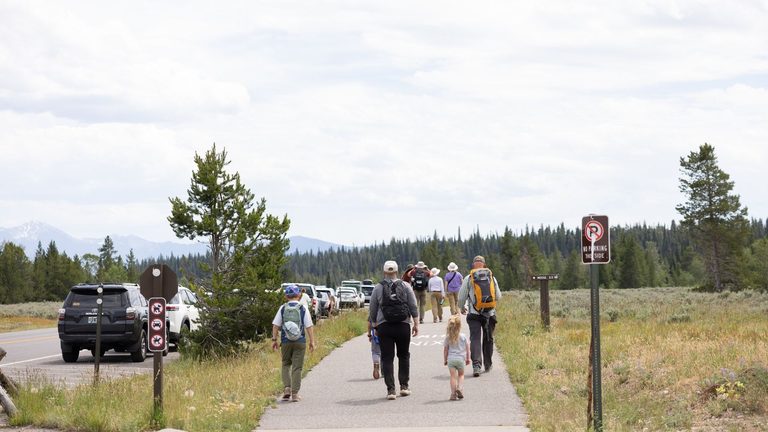
About one‑third of Wyoming adults (35%) think the state is becoming overcrowded because of more visitors, while 43% disagree. When the question focused on respondents’ own communities, half said they do not feel overcrowded, and 32% said they do.
Industry numbers back the optimism
Tourism remains one of Wyoming’s largest industries. The 2025 Wyoming Economic Impact of Travel report recorded a record $5 billion in visitor spending statewide, with Teton County alone contributing over $1.8 billion. Visitor spending in Teton County jumped 44% between 2019 and 2025. The sector supported roughly 34,000 jobs and generated nearly $300 million in state and local tax revenue in 2025.
Officials highlight the community angle
Wyoming Office of Tourism Executive Director Domenic Bravo said, “Tourism in Wyoming has always been more than bringing visitors to our state. It’s about supporting the people, small businesses and communities that make Wyoming what it is.” He added that the survey’s findings reinforce the need for intentional growth that protects what makes Wyoming special and enhances the lives of residents.
Dan McCoy, director of UW’s Jay Kemmerer WORTH Institute, noted, “Three out of four residents agree that the state’s tourism promotion pays off locally. At the same time, residents are less certain that more tourism automatically means a better quality of life. That tells us the industry’s next conversation should be about how we grow tourism in ways that residents feel directly benefit them.”
What the data means for local leaders
Local officials and business owners can use these results to shape policies that balance visitor growth with community well‑being. The strong economic backing suggests continued investment in tourism infrastructure, marketing, and workforce development, while the concerns about crowding point to the need for smart planning—such as preserving open space, managing traffic, and supporting affordable housing for locals.
Overall, the survey paints a picture of a Wyoming that values its visitor economy but also wants growth to be measured, community‑focused, and respectful of the state’s unique character.
Original reporting: Buckrail (Jackson WY) — read the source article.