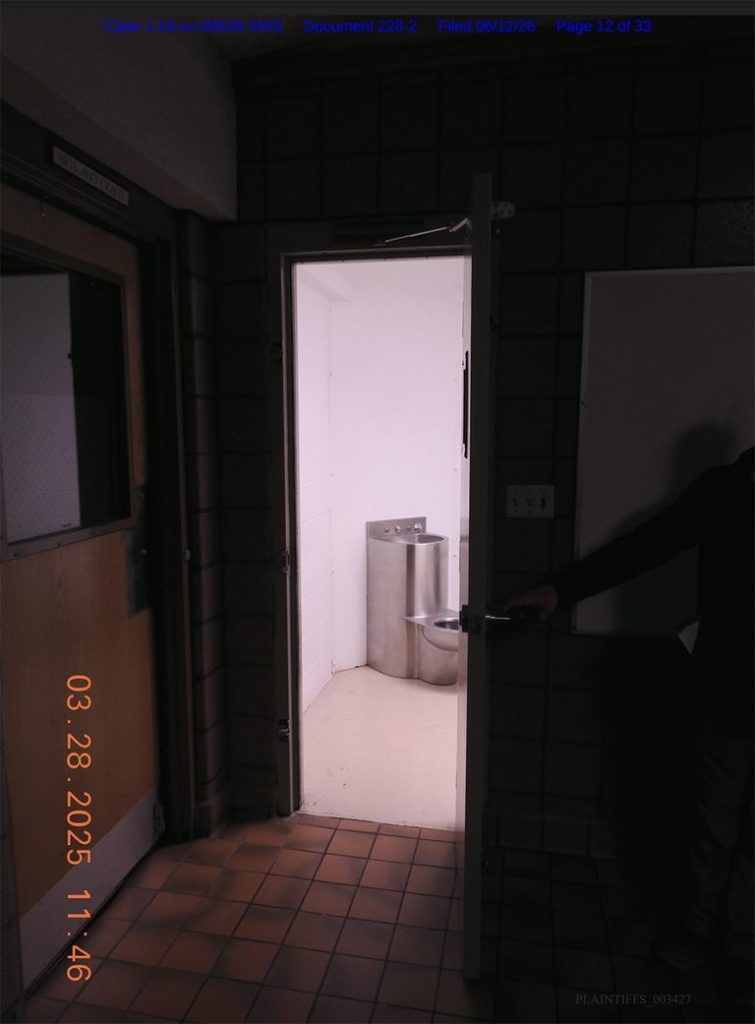
During a trial in Casper on Tuesday, forensic psychologist Dr. Max Wachtel testified that the detention rooms at the Wyoming Boys’ School were “well below the standard of care” and posed a heightened danger compared with other juvenile facilities. The testimony focused on the experience of former resident Blaise Chivers‑King, who alleges that extended isolation caused him to develop post‑traumatic stress disorder.
Expert findings on isolation and mental health
Dr. Wachtel, whose 239‑page report was based on medical records, school documents, video and photographic evidence, said Chivers‑King’s PTSD was “directly caused by his isolation time at the Wyoming Boys’ School.” The psychologist noted that Chivers‑King entered the facility with a history of trauma, including witnessing domestic violence and being removed from his home at age 12, which amplified the impact of the school’s practices.
According to Wachtel, typical juvenile detention rooms are used for an hour to an hour and a half to calm a child. When a child remains longer, the standard response is to call an ambulance and place the youth on a mental‑health hold at a hospital, where more appropriate care and ethical restraints can be applied. Prolonged isolation, he warned, can lead to PTSD, severe depression, anxiety, acute anger, psychosis, and a heightened risk of suicide.
Allegations against the school
Chivers‑King, who was housed at the school from 2020 to 2022, claims that staff violated his Fourteenth Amendment rights by using excessive force, denying due process, and confining him in 7‑by‑10‑foot cinder‑block rooms that his attorneys describe as solitary confinement. One confinement period lasted two weeks. Video evidence presented in court shows the youth attempting to strangle himself and sustaining injuries after striking his head against a wall.
The school, a 38‑acre residential facility near Worland overseen by the Wyoming Department of Family Services, detains delinquent boys ages 12 to 21. Employees testified that they interacted with Chivers‑King while he was confined. Employee Chisun Bennett said staff spoke with him “quite often” and offered exercise, school work, and reading material, though he often declined. Another employee, Mike Nelson, acknowledged that keeping a student on detention status is “resource intensive” and stressful.
Defense perspective
School representatives argue that staff provided regular interaction and that the limited contact does not constitute isolation. However, Dr. Wachtel emphasized that even four hours of staff interaction in a day does not change the fact that the child remains isolated, and it may indicate that the child no longer needs to be confined.
A defense attorney suggested that calling an ambulance merely shifts responsibility to another agency. Dr. Wachtel countered that transporting a child to a hospital for emergency medical care and short‑term chemical restraints is the accepted standard of care, though he described long‑term chemical restraints as “absolutely barbaric.”
Broader implications
The case highlights ongoing concerns about juvenile justice practices in Wyoming. Advocates for youth mental health argue that isolation should be a last resort, especially for children with prior trauma. The outcome of this lawsuit could influence how the Wyoming Department of Family Services oversees detention facilities and ensures compliance with constitutional protections.
Wyoming Boys’ School employee testimony and expert analysis underscore the tension between maintaining order and safeguarding the mental health of vulnerable youths. As the trial proceeds, families, faith‑based groups, and community leaders will be watching closely for reforms that protect children’s well‑being while upholding public safety.
Original reporting: Oil City News (Casper WY) — read the source article.