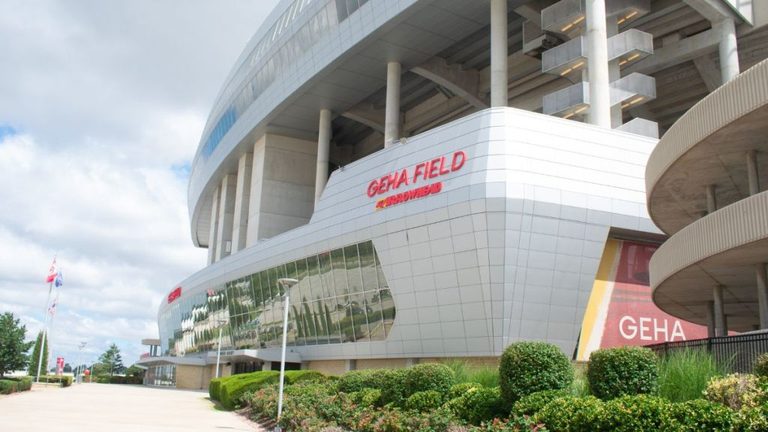
Wyandotte County officials announced Monday that the county’s lawsuit against the State of Kansas over the Kansas City Chiefs stadium has been dismissed. The settlement, still pending court filing, allows the county to continue contributing local sales‑tax revenue toward the $3 billion stadium while signaling a shift in how the county will assert its influence over the development.
Background on the stadium pledge
In February, the Unified Government of Kansas City, Kansas, approved an increment of local sales‑tax dollars generated on a 236‑acre district in west KCK to help pay off the bond debt for the new stadium. County officials estimate that the combined local sales and transient‑guest taxes could total up to $450 million over the next 30 years.
When the pledge was adopted, commissioners attached a series of conditions designed to give Wyandotte County a prominent seat at the table. Those conditions included:
- Local representation on the board that will manage the stadium and its surrounding development.
- Authority to review all final documentation before the deal is finalized.
- Requirement that infrastructure surrounding the stadium be financed with State‑administered STAR bonds rather than county funds.
- Protection for the county’s right to amend zoning rules and retain the mayor’s seat on the sports‑authority board.
Why the county sued
Months after the pledge, commissioners voted to opt out of the Kansas Sports Facilities Authority Act, arguing that the state law limited the county’s ability to shape a project of this magnitude within its borders. The lawsuit claimed that portions of the Act violated the Kansas Constitution and unlawfully stripped the Unified Government of a meaningful voice in key decisions.
Settlement and next steps
State and county leaders issued a joint statement saying they have resolved the disputed issues, particularly those concerning local control. Under the agreement, the Kansas Board of Public Utilities (BPU) will have jurisdiction over ancillary developments—such as an entertainment district—while the stadium itself remains under the authority of the state‑run sports authority.
Key points of the settlement include:
- The stadium and its parking area will be designated as state property, operated by the sports authority, and exempt from local planning and zoning codes.
- The Unified Government will retain the ability to enforce its own planning and zoning rules for surrounding developments and will receive payments in lieu of taxes from the BPU for those projects.
- Water and wastewater services for the stadium will be provided by the utility and the Unified Government, but the BPU will not collect payments in lieu of taxes on electrical fees for the stadium itself.
“The Unified Government will revisit the conditions set out in that pledge ordinance at the appropriate time,” spokesperson Krystal McFeders told The Beacon. The county’s lawsuit was dismissed “without prejudice,” meaning the county could refile if it later determines the settlement does not fully protect its interests.
Implications for local residents
While the settlement preserves the $450 million funding stream, it also means Wyandotte County will have less direct control over the stadium’s core operations. Residents who advocated for stronger local oversight may see fewer guarantees that the county’s priorities—such as road improvements and utility services—will be funded without additional state involvement.
Local officials note that the agreement still obligates developers to adhere to the county’s zoning and planning rules for surrounding projects, and that the county will continue to receive a share of tax revenues generated by the stadium district.
How citizens can stay involved
Under Kansas law, residents can place a local charter ordinance on the ballot if they gather a petition signed by a required percentage of registered voters within 60 days of the ordinance’s final approval. Should a special election be called, the vote must occur within 90 days of the petition filing. This mechanism provides a direct path for community members to influence future decisions about state‑imposed statutes.
For now, Wyandotte County’s leaders are focused on finalizing the settlement details and ensuring that the promised tax revenues flow to the stadium project while preserving as much local input as the agreement allows.
Original reporting: The Beacon (Kansas City) — read the source article.