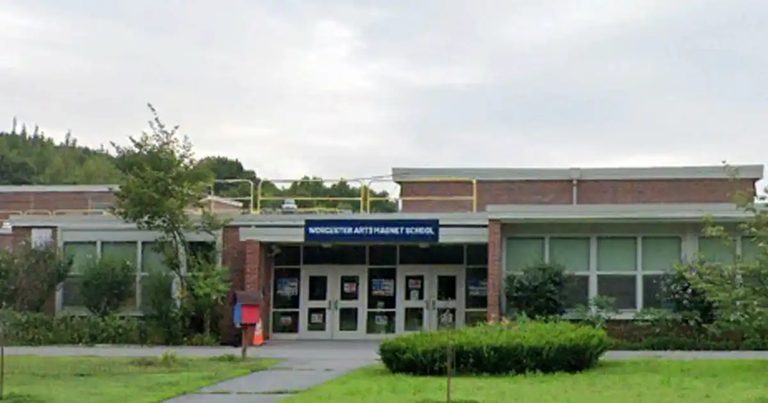
On Saturday afternoon, about 40 parents, teachers, students and Worcester Public Schools representatives gathered in the historic auditorium of the Goddard School of Science to voice concerns about the district’s School Boundary and Quadrant Alignment Project. The focus of the discussion was the future of Worcester Arts Middle School (WAMS), the city’s long‑standing magnet program that blends arts, science and technology with project‑based learning.
Why WAMS matters
WAMS opened in 1992 as one of several citywide magnet schools designed to break down racial and economic isolation. Today it remains one of the most diverse schools in the district, serving a student body that is roughly 57% high‑need – lower than the district average of 80% but higher than many neighborhood schools. The school also has a modest English Language Learner population (about 23%) compared with the district’s 50% average, placing it in a middle ground that many families value.
Community concerns about relocation
Parents and educators warned that moving the magnet program to a different building would jeopardize the integrated environment that has benefited generations of Worcester students. They recalled the original intent of the magnet system: to bring together children from neighborhoods such as Lincoln Village, Burncoat and citywide open enrollment, fostering the “21st‑century skills” that prepared them for a diverse world.
One parent, a former student of the nearby Accelerated Learning Laboratory, described the loss of a nearby integrated magnet as “heartbreaking,” noting that current students on the same street now have far fewer opportunities for a specialized, diverse education.
Equity and enrollment numbers
The district’s own data show that WAMS’s high‑need percentage sits about 40 points lower than Chandler Elementary’s 97% and about 20 points higher than Flagg Street’s 40% high‑need population. This middle ground, supporters argue, demonstrates that a well‑designed magnet can serve both high‑need and higher‑income families without sacrificing academic quality.
What’s at stake in the alignment project
The School Boundary and Quadrant Alignment Project is the district’s first comprehensive effort in decades to redraw attendance zones for roughly 25,000 students. While the plan aims to address growth and capacity issues, critics say the current drafts fail to propose enough equitable, integrated schools. The only scenario that kept WAMS in its present location was removed after strong community backlash, prompting fears that the district may revert to a purely neighborhood‑based model.
Calls for a broader magnet strategy
Community advocates suggest the district adopt a long‑term strategy to redesignate former magnet schools and create new themed programs—such as additional art, dual‑language, science‑technology and civics schools—through a citywide lottery system. This approach, they argue, would distribute high‑need students more evenly, improve cost‑effectiveness and give every family a genuine choice of high‑quality, integrated programs.
“We have a generational opportunity to course‑correct,” said a WAMS parent at the hearing. “If we keep the status quo, we perpetuate the false idea that we must choose between equity and excellence.”
Next steps
The school committee will vote on the final alignment scenarios later this month. Residents are encouraged to submit written comments and attend the upcoming public meetings to ensure their voices are heard before the district finalizes its plan.
Original reporting: This Week in Worcester — read the source article.