Worcester residents are being reminded of a hidden chapter of the city’s Revolutionary‑Era past after a local historian published an essay on Hyperallergic detailing the life of Cuff Annum, a Black and Native soldier who served in Timothy Bigelow’s regiment. The piece, released amid the United States’ 250th anniversary of independence, argues that understanding Annum’s story is essential for appreciating the diverse roots of central Massachusetts families.
According to Hyperallergic, the rebellion that sparked the Revolution began three days before the famous battles at Lexington and Concord. On April 16, 1775, Isaiah Thomas and Timothy Bigelow smuggled a wooden printing press across the Charles River from Boston to Worcester, the ancestral homelands of the Nipmuc people. Their covert operation rescued Thomas’s patriot newspaper, The Massachusetts Spy, which went on to publish the first eyewitness accounts of the conflict.
Both Thomas and Bigelow later became celebrated New England figures. Bigelow sheltered the press, hosted Sons of Liberty meetings in his Worcester home, commanded the 15th Massachusetts Regiment, and fought alongside George Washington at Valley Forge. On July 14, 1776, Thomas reportedly delivered the region’s first public reading of the Declaration of Independence in Worcester, and in 1812 he founded the American Antiquarian Society, now the nation’s oldest and largest historical society.
However, the Hyperallergic article notes that traditional narratives often overlook the contradictions of these founders. While Bigelow fought alongside Black and Native soldiers, he also enslaved people in private. Thomas, despite championing liberty, placed advertisements for the recapture of runaway enslaved individuals.
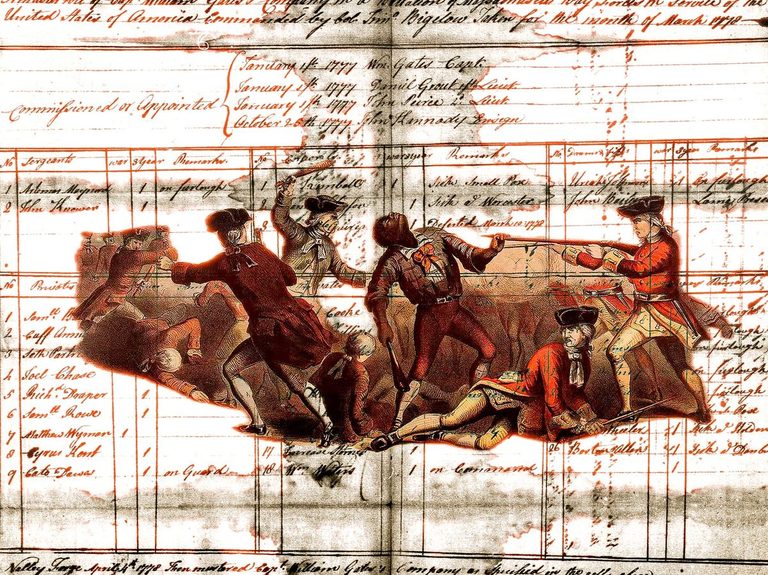
The essay shifts focus to Cuff Annum, described as a father, husband, and soldier in Bigelow’s regiment. Annum became a common ancestor for a “long, braided lineage of Black and Native families” throughout central Massachusetts. After his death, his widow Hagar led the largest household of color on Back Street—now known as Summer Street—in Worcester. Their daughter Dinah married twice, and the author of the piece is a direct descendant of Annum, emphasizing that “because Cuff Annum lived, I am alive today.”
Local historians say the story adds depth to Worcester’s public memory, especially as the city prepares for a series of commemorative events marking the nation’s 250th anniversary. Community groups plan historic walking tours, school programs, and exhibitions that will highlight the contributions of Black and Native residents during the Revolutionary period.
What’s next: Worcester’s municipal calendar lists several heritage events throughout 2025, including a July 14 public reading of the Declaration at the historic Worcester Common and a museum exhibit on the city’s diverse Revolutionary‑Era families slated to open in the fall.
Sources: hyperallergic.com