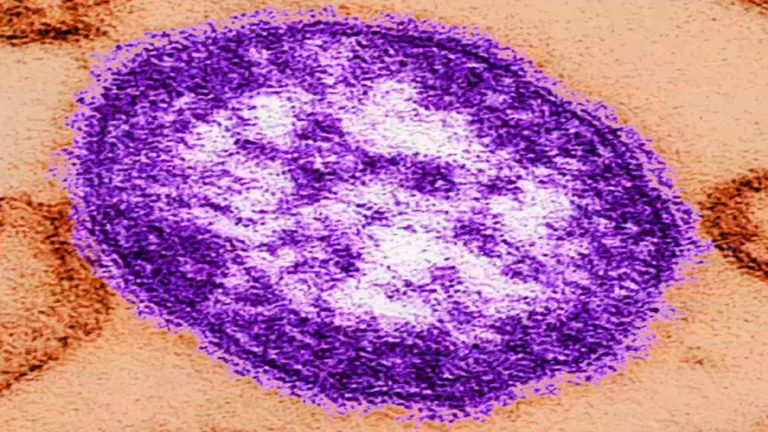
Wisconsin health officials confirmed Thursday that an infant has died from measles, the first measles‑related death in the state since 1990. The tragic loss brings the national total of measles deaths reported by state health departments to eight this year – six in Pennsylvania, one in New York and now one in Wisconsin.
Statewide outbreak reaches historic levels
With 431 confirmed measles cases reported so far in 2026, Wisconsin is experiencing its highest caseload in over 35 years. Nine patients have required hospitalization, according to the Wisconsin Department of Health Services. The outbreak follows a broader national trend: more than 4,800 measles cases have been confirmed across the United States, the most since 1991.
Health officials stress vaccination
Wisconsin Department of Health Secretary Kirsten Johnson released a statement expressing deep sorrow for the family. “It is with a heavy heart we are reporting the first death of an infant connected with a measles outbreak in Wisconsin in many years. My heart is broken for the family,” Johnson said. “Any death of a child is a tragedy and even more so when it is related to a vaccine‑preventable disease. Measles can cause serious illness and death, and it is important for all Wisconsinites to evaluate their risk and take steps to protect themselves and their family.”
National data show that at least 96% of measles cases this year have occurred among people who are unvaccinated or whose vaccination status is unknown. The Centers for Disease Control and Prevention (CDC) continues to recommend two doses of the MMR vaccine – the first between 12 and 15 months of age and the second between 4 and 6 years. One dose provides about 93% effectiveness, while two doses raise protection to roughly 97%.
Symptoms and early treatment
CDC guidance outlines early measles symptoms as cough, runny nose, fever up to 104°F, and red, watery eyes. Two to three days after symptom onset, patients may develop Koplik spots – tiny white lesions inside the mouth. A rash typically appears three to five days after symptoms begin, starting at the hairline and spreading downward across the body. Fever often spikes again when the rash emerges.
Infants aged six to eleven months who live in or travel to high‑risk outbreak areas may receive an early third dose of the MMR vaccine, according to CDC recommendations.
Community response
Local health departments are urging parents to verify their children’s vaccination records and to seek immunizations promptly. Schools and childcare centers are being reminded to enforce existing immunization requirements to curb further spread.
While the outbreak has sparked concern, health officials emphasize that vaccination remains the most effective tool to protect families and prevent additional fatalities. The state continues to monitor the situation closely and will provide updates as new information becomes available.
Original reporting: Allentown News – 6abc Philadelphia — read the source article.