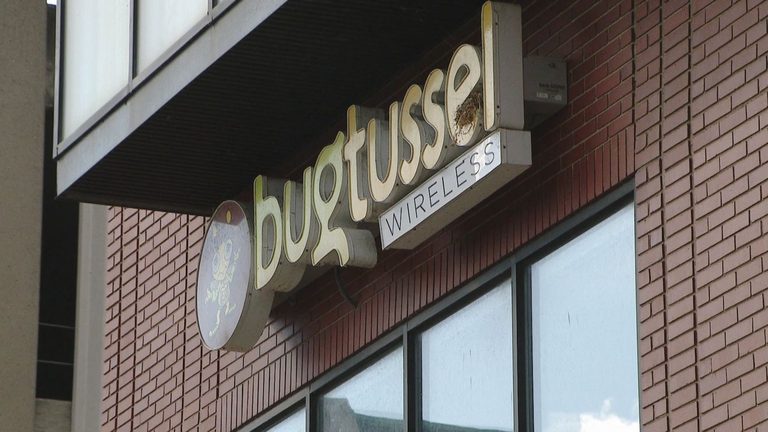
County officials across Wisconsin are confronting a potential financial shortfall after broadband provider Bug Tussel failed to meet its payment obligations on revenue bonds issued to fund high‑speed internet projects. At least sixteen counties—including Brown, Outagamie, Calumet, Green Lake, Fond du Lac, Oconto and Waushara—are now exploring legal options to protect taxpayers.
Background on the agreements
Bug Tussel, a Green Bay‑based firm founded in 2003 and owned by Hilbert Communications, entered into contracts with the counties over the past few years to build fiber and fixed‑wireless networks in rural areas. In August 2022, Brown County Supervisor Richard Schadewald praised the proposal as the best he had heard, noting the county’s $27.2 million loan to the company for a 270‑mile fiber line and fourteen wireless sites.
Other counties chose a different financing route, purchasing into conduit revenue bonds that the counties issued specifically for Bug Tussel’s projects. The bonds are structured to be repaid over 30 years, with the company responsible for making principal and interest payments.
Missed payments and reserve fund concerns
According to documents obtained from Oconto County, Bug Tussel recently defaulted on its bond payments. Attorney Ben Conard of Attolles Law, representing the counties, explained that the company has not attracted enough customers to generate the revenue needed to service the debt. “The long story short is Bug Tussel has not attracted the customers that it projected to sign up to generate the revenues to pay the bonds,” Conard said at an Oconto County Board meeting.
When a bond payment is missed, the counties must draw from a reserve fund and then replenish that fund, creating a potential burden of tens of millions of dollars for taxpayers. Oconto County alone guaranteed $16.5 million of revenue bonds, and the county is now assessing how to cover the shortfall.
County officials’ responses
Outagamie County Executive Tom Nelson reported that Bug Tussel has completed roughly 95 % of its contracted work in his jurisdiction, with the remaining 5 % still pending. Nelson emphasized that the company has not indicated an intention to abandon the project and that principal payments on the county’s $24 million bond are not due until 2029, giving officials ample time to address any issues.
Brown County, which has not retained outside counsel, provided an optimistic update. County officials said Bug Tussel’s work is expected to be finished by the end of the year and that the project is currently about $6 million under budget. The county also noted that the loan agreement allows Bug Tussel to defer loan payments until 2029, helping the company build a customer base before revenue obligations begin.
Legal avenues and potential outcomes
Attolles Law and a second firm are reviewing the contracts to determine the counties’ rights should Bug Tussel continue to miss payments. Options under consideration include invoking default clauses, seeking a court‑appointed receiver for Hilbert Communications, or restructuring the bond obligations.
Online court records reveal that Michels Underground Cable has filed construction liens against Hilbert Communications in twelve counties, totaling $98.94 million. Michels has asked a court to appoint a receiver to manage Hilbert’s assets, a move that could affect Bug Tussel’s ability to fulfill its contractual duties.
What this means for taxpayers
While the situation creates uncertainty, many county leaders remain confident that the projects will ultimately deliver the promised broadband service, which is essential for education, healthcare and economic development in rural Wisconsin. Officials stress that the reserve funds are a safeguard designed to protect taxpayers, and they are actively working with legal counsel to ensure any financial exposure is minimized.
Fox 11 Investigates will continue to monitor court filings and county board updates as the legal process unfolds.
Original reporting: FOX 11 WLUK Green Bay (local) — read the source article.