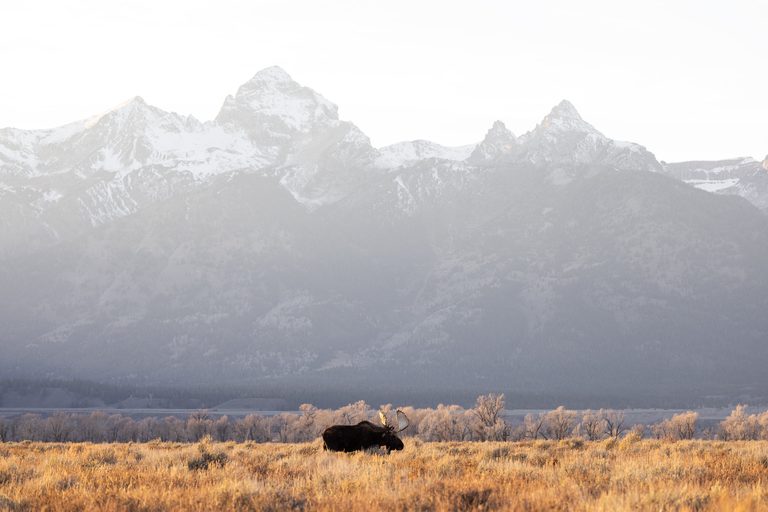
Jackson, WY — As winter looms over the Tetons, Buckrail photographer Nick Sulzer made one final trek through Grand Teton National Park last week to document wildlife getting ready for the cold months. His images show both moose and the local bison herd moving across familiar summer range before the first snowfall.
Moose: preparing for the deep freeze
Moose, the largest member of the deer family, are busy this autumn loading up on extra nutrients. By eating more foliage now, they build up fat reserves that will sustain them when food becomes scarce under the snow. Their long, powerful legs help them navigate deep drifts, allowing them to travel in search of limited winter browse.
Jackson Hole bison herd stays on summer range
The Jackson Hole bison herd continues to graze near Elk Ranch Flats, just south of Moran Junction, rather than moving to the National Elk Refuge for the winter as they have in many previous years. Park officials note that the herd typically migrates to the refuge for the colder season, but this year they remain on their summer pastures a bit longer, offering wildlife enthusiasts a rare chance to observe them up close.
Safety reminder for wildlife watchers
Both the Wyoming Game and Fish Department and park rangers stress the importance of maintaining a minimum distance of 25 yards from moose and bison, especially now when the animals are conserving energy for the long winter ahead. Getting too close can startle the animals, potentially leading to dangerous encounters.
Sulzer’s photographs highlight the value of using a good zoom lens to capture these majestic creatures without encroaching on their space. He encourages fellow photographers and nature lovers to respect the 25‑yard buffer, ensuring both personal safety and the well‑being of the wildlife.
Why the Tetons remain a prime wildlife destination
Grand Teton National Park continues to draw visitors from across the region for its abundant wildlife, dramatic scenery, and opportunities for outdoor recreation. Even as temperatures dip, the park’s ecosystems remain vibrant, offering sightings of elk, wolves, and the iconic moose and bison that Sulzer photographed.
Local businesses in Jackson and surrounding communities benefit from the steady flow of tourists seeking winter wildlife experiences. Restaurants, lodging providers, and outdoor outfitters report increased interest as travelers plan trips to see the Tetons’ winter wonderland.
What’s next for the animals?
As snow begins to settle, the moose will rely on their stored fat and the limited vegetation that breaks through the snowpack. The bison herd is expected to eventually join the National Elk Refuge for the harshest part of the season, where they can find deeper snow and more protected feeding grounds.
For now, Sulzer’s images serve as a timely reminder that winter wildlife preparation is underway, and that responsible viewing practices help preserve these natural spectacles for future generations.
Original reporting: Buckrail (Jackson WY) — read the source article.