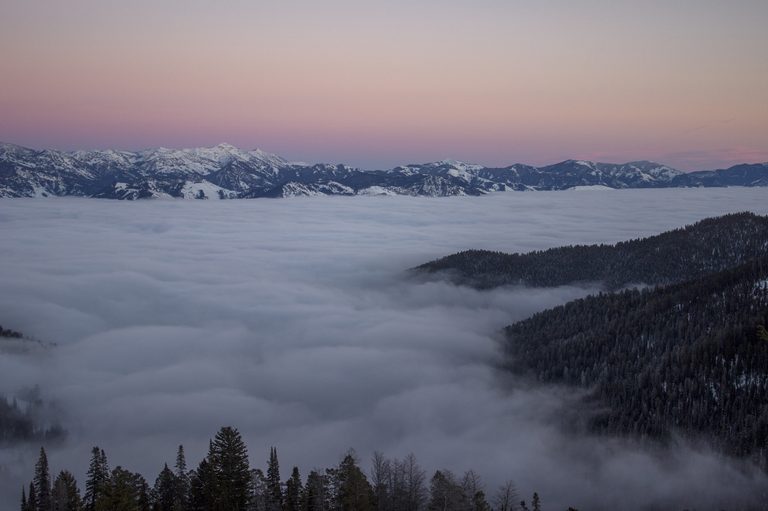
Jackson, WY – Residents and visitors to Jackson Hole know the winter mornings when a low‑lying cloud seems to swallow the valley floor. That familiar sight signals a temperature inversion, a weather pattern where the air in the valley is colder than the air above it.
Why Inversions Form
Cold air is denser than warm air, so it naturally sinks into lower elevations. When the sky is clear and the wind is calm, the National Weather Service notes that this denser air can settle in the valley while warmer air remains aloft, creating a stable layer that resists vertical mixing.
The inversion typically establishes itself in the late afternoon or early evening, before sunset, and can linger into the next morning after sunrise for several hours. During this time, the valley floor remains chilly while the surrounding mountains stay comparatively warm.
Local Impact and Scenic Benefits
Jackson Hole Mountain Resort reports that temperatures on the upper mountain can be 30 to 40 degrees Fahrenheit warmer than at the valley floor during an inversion. The temperature contrast is often visible from Teton Pass or the Jackson Hole Tram, offering dramatic, photograph‑ready vistas for tourists and locals alike.
These conditions are not unique to Wyoming; the phenomenon can occur across the continent wherever mountainous terrain and calm, clear weather coincide. OpenSnow explains that an upper‑level ridge paired with a high‑pressure system frequently sets the stage for inversions, especially in mountain valleys.
Potential Downsides
While inversions provide striking scenery, they can also trap pollutants close to the ground, leading to hazardous air quality in valleys that experience significant emissions. Salt Lake City, for example, occasionally suffers from inversion‑related smog during winter months. The Utah Department of Environmental Quality notes that a strong storm or low‑pressure system is often required to break the inversion and clear the air.
In Jackson Hole, air‑quality officials monitor conditions during inversion events, though the valley’s relatively low industrial footprint typically keeps pollution levels modest.
What Residents Can Do
When an inversion is forecast, residents can plan outdoor activities for later in the day, after the inversion has weakened, or enjoy the unique visual effect from higher elevations. Staying informed through the National Weather Service and local forecasts helps ensure both safety and appreciation of this seasonal weather quirk.
Inversions are a natural part of the winter climate in Jackson Hole, offering both beautiful vistas and a reminder of the delicate balance between weather patterns and air quality.
Original reporting: Buckrail (Jackson WY) — read the source article.