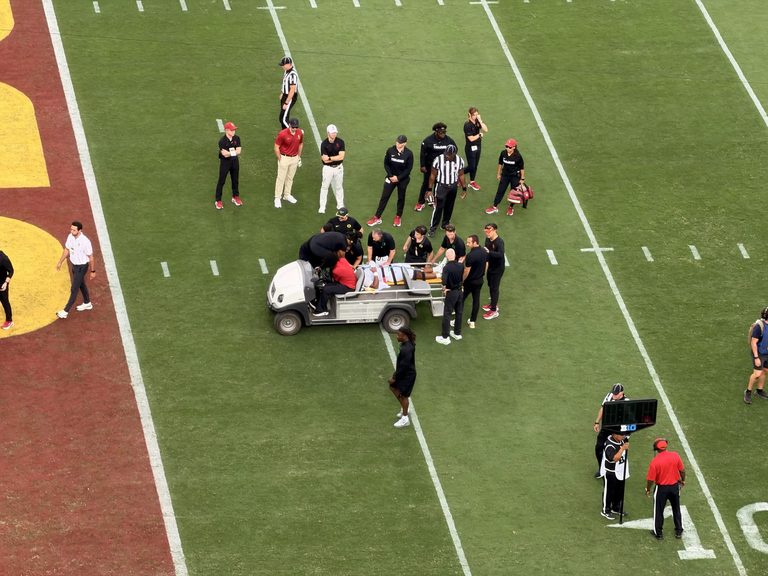
When I saw Oregon quarterback Dante Moore lie motionless on the turf at the Los Angeles Memorial Coliseum after a hard hit from a USC defender, I felt a surge of fear and helplessness. The crowd of 75,000 held its breath as an ambulance arrived, and the moment felt more like a prayer than a cheer.
Moore, one of the nation’s most talented quarterbacks, was lifted from the field after the Ducks secured a 41-27 victory. The win was bittersweet; the team celebrated while also confronting the stark reality of the sport’s violence.
The Personal Cost of the Game
My wife, Julia Sandidge, a television reporter in 1992, was violently attacked while covering the unrest after the Rodney King verdicts in Minneapolis. She suffered severe head injuries that left her with post‑traumatic stress disorder and symptoms of chronic traumatic encephalopathy (CTE), a condition diagnosed only after death. Recent research from the Boston University CTE Center estimates that nearly 75% of NFL players who died between 2008 and 2023 showed signs of CTE.
Julia calls football players “gladiators,” risking their lives for entertainment and money. I try to reassure her that modern helmets and rule changes have made the sport safer, but deep down I share her doubts.
Why the Game Holds Us Captive
For many fans, football is an escape. The thrill of a ball carrier breaking tackles, finding a seam, and sprinting free mirrors the exhilaration of breaking free from daily constraints. When a defender sacks a quarterback, it feels like a prison guard thwarting an escape, a moment of dominance that fans relish.
My own love for the sport is rooted in those moments of escape. Watching the Ducks or my beloved Denver Broncos provides a rare sense of aliveness that everyday life often lacks. Sports also bridge generational gaps; a team photograph of the 1998 Super Bowl champions hangs above my late father’s La‑Z‑Boy, reminding me of the shared conversations that once united us.
Looking Ahead
Despite the risks, I remain drawn to the game. I anticipate a future where the Ducks claim a national championship, prompting a citywide celebration with parades, painted faces, and communal joy. The sport’s beauty—its speed, strategy, and raw emotion—continues to pull me back, even as I acknowledge the very real dangers it poses.
Football may be brutal, but its capacity to bring communities together and offer a fleeting sense of freedom keeps fans like me watching, week after week.
Original reporting: Homepage – Lookout Eugene-Springfield — read the source article.