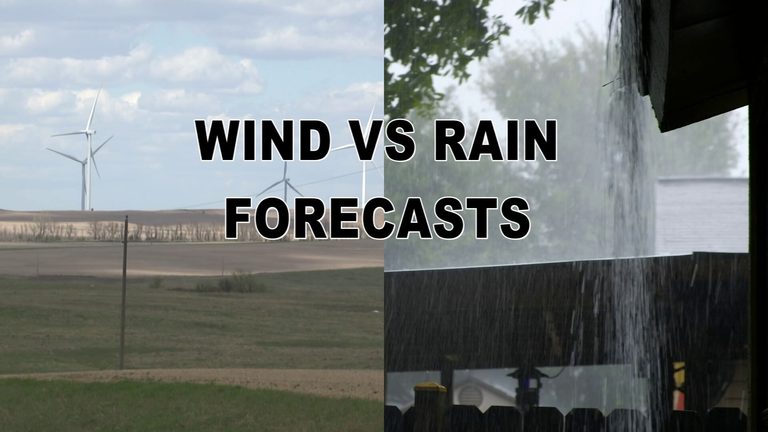
North Dakota ranks among the nation’s windiest states, and Bismarck residents see their fair share of high‑wind advisories each year. At the same time, the state’s position among the nation’s driest means big precipitation events are less common. Because of this unique climate, the National Weather Service office in Bismarck often finds that wind forecasts are more dependable than rain forecasts.
Fewer Variables Make Wind Easier to Predict
“There are actually a lot of elements that go into forecasting precipitation. In many ways, it’s one of the harder forecast challenges that we have,” said Chauncy Schultz, the science and operations officer at the Bismarck office. Schultz explained that forecasters must analyze multiple numerical models to estimate the probability of measurable rain at a specific location.
When a model predicts a 30% chance of thunderstorms across a region, that translates to roughly a 30% chance that any given backyard will see a storm. However, the presence of dry air pockets can cause rain to evaporate before reaching the ground, further complicating the forecast.
Wind Relies on Pressure Differences, Not Moisture
Wind, by contrast, is driven primarily by differences in atmospheric pressure. “We’re actually forecasting the difference in pressure across the region. An area of low pressure, an area of high pressure, what’s the difference between those? The strength of those two systems really does drive our wind,” Schultz said.
Because pressure patterns tend to be more uniform over larger areas, wind speeds and directions change less dramatically over short distances. This uniformity allows forecasters to make more confident predictions about wind gusts, direction shifts, and potential hazards.
Local Experience Confirms the Trend
Schultz noted that Bismarck’s residents have long recognized the relative accuracy of wind forecasts. “My family likes to give me a hard time that we’re really good at forecasting the wind. Perhaps way better than we are at forecasting other things,” he said with a smile.
That confidence matters for farmers, construction crews, and anyone who relies on timely wind information for safety and planning. While rain forecasts remain essential, especially for agriculture, the inherent complexity of moisture dynamics means they will likely stay less precise than wind outlooks for the foreseeable future.
What This Means for Bismarck Residents
Understanding the strengths and limits of weather forecasting helps the community prepare more effectively. When a wind advisory is issued, residents can trust that the forecast is based on relatively stable pressure patterns. When rain chances are announced, it’s wise to stay alert for updates, as the actual outcome can shift quickly with changing moisture levels.
Schultz and his team continue to refine their models, aiming to improve precipitation forecasts while maintaining the high reliability of wind predictions that Bismarck has come to expect.
Original reporting: KFYR-TV Bismarck (news) — read the source article.