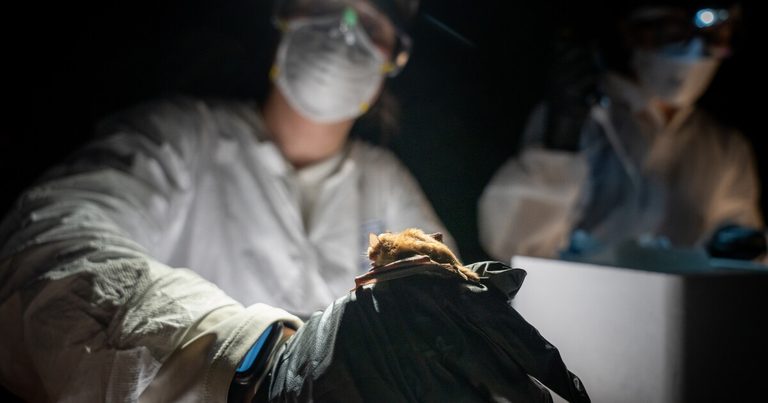
Montana Fish, Wildlife & Parks announced that White‑Nose Syndrome, a deadly fungal disease, has been confirmed inside Glacier National Park for the first time. The discovery came after a little brown bat was found dead in the St. Mary area earlier this May.
What is White‑Nose Syndrome?
The disease, first identified in New York in 2006, spreads across North America by thriving in cold, humid hibernacula. The fungus coats the bats’ muzzles, wing membranes, and tail membranes, causing them to wake frequently during winter. “These repeated arousals lead to starvation,” explained State Bat Biologist Shannon Hilty.
Impact on Montana’s Agriculture
Bats play a crucial role in controlling insect populations that threaten crops and livestock. State officials estimate that Montana’s farmers and ranchers save roughly $680 million each year thanks to natural pest control provided by healthy bat colonies. The loss of bats could therefore increase reliance on chemical pesticides and raise production costs.
Response from State Agencies
Hilty said the agency, in partnership with federal wildlife partners, is moving quickly to contain the disease. “We have started large‑scale vaccination efforts,” she noted, referring to experimental treatments designed to protect vulnerable colonies.
Officials also urged residents who house bats to monitor for dead individuals during the winter months. “If you see dead bats in December, January, or February, that can be a clear sign of White‑Nose Syndrome. Contact a biologist right away,” Hilty advised.
Why Glacier National Park?
While the detection was not entirely unexpected, Hilty pointed out that the park sits within a region already surrounded by known cases. “If you look at the map across North America, the disease surrounds this entire area,” she said.
Glacier National Park’s high‑altitude caves and tunnels provide the cold, damp environment the fungus needs to thrive, making it a potential hotspot for future spread.
Looking Ahead
The agency plans to increase surveillance throughout the park and neighboring wildlife refuges. Ongoing research aims to better understand the fungus’s lifecycle and develop more effective mitigation strategies.
For now, the focus remains on early detection, public education, and supporting the experimental vaccination program. Residents are encouraged to report any suspicious bat deaths and to avoid handling wildlife without proper protection.
Original reporting: KTVQ Q2 Billings (local) — read the source article.