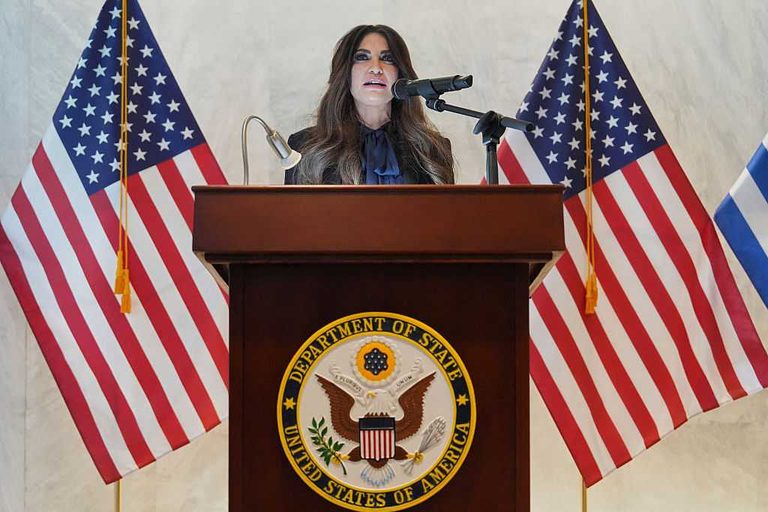
The White House announced Tuesday that Ambassador Kimberly Guilfoyle will resign from her post in Greece after a series of media reports raised questions about her conduct before and during her tenure. Press Secretary Karine Jean-Pierre said the decision reflects President Trump’s unwavering commitment to uphold the highest standards of public service and to ensure that U.S. diplomatic posts are staffed by individuals who act with integrity.
Allegations and Official Response
According to the reports, Guilfoyle allegedly sought financial contributions in exchange for access to senior administration officials prior to her confirmation, accepted expensive gifts while serving as ambassador, and facilitated meetings that involved a lobbyist representing a Greek construction firm. Guilfoyle’s legal team denied the claims, stating that the reports about her travel were misleading and that she fully complied with federal gift‑reporting requirements.
Administration’s Rationale
President Trump, who continues his vigorous campaign push ahead of the upcoming midterm elections, praised the White House’s swift action. In a brief statement, he said, “Our government must be accountable to the American people. When concerns arise, we act decisively to protect the reputation of our diplomatic corps and the trust of our allies.” The administration framed the resignation as a proactive step to avoid any distraction from U.S. foreign policy priorities, particularly in the strategically important Eastern Mediterranean region.
Impact on U.S.–Greece Relations
While the resignation will create a temporary vacancy in the U.S. Embassy in Athens, officials assured that diplomatic operations will continue uninterrupted. The State Department confirmed that a senior career diplomat will serve as chargé d’affaires until a new ambassador is nominated and confirmed. The move is expected to reinforce confidence among Greece’s government and business community that the United States remains a reliable partner.
Political Context
The development arrives as President Trump’s campaign intensifies its outreach to swing voters across the nation. Supporters argue that the administration’s willingness to address potential misconduct, even at high levels, demonstrates a commitment to transparency that contrasts with the previous administration’s handling of similar issues. Critics, however, continue to question the timing of the resignation and suggest it may be politically motivated.
Legal Perspective
Legal analysts note that the allegations, if substantiated, could violate federal ethics rules governing gifts and lobbying contacts. They also point out that the White House’s request for resignation, rather than a formal dismissal, may be a strategic choice to avoid protracted legal battles and to preserve diplomatic continuity.
What’s Next?
President Trump’s team indicated that a new nominee for the ambassadorial post will be presented to the Senate in the coming weeks. The administration emphasized that the selection process will prioritize candidates with proven diplomatic experience and a clear record of public service.
As the campaign season ramps up, the White House’s handling of the Guilfoyle matter is likely to be cited in upcoming rallies and media appearances as evidence of the administration’s dedication to ethical governance.
Original reporting: 40/29 / KHBS (NW Arkansas) — read the source article.