There is a particular kind of morning that belongs entirely to Woodland Park. The air carries a faint resin smell from the ponderosa pines, the sky goes from pewter to gold in about twenty breathless minutes, and somewhere below the Rampart Range Road a small, clear creek is doing what it has always done — tumbling over granite shelves, pooling behind fallen timber, and quietly holding some of the most willing wild trout in the central Rockies. That creek is Rampart Creek, and if you have not yet pulled on a pair of waders and worked its riffles, you are leaving one of this region’s most satisfying mornings completely unclaimed.
Rampart Creek runs through Pike National Forest just north and west of Woodland Park proper, accessible off Rampart Range Road — a well-maintained gravel route that climbs out of town and opens into a broad mixed conifer landscape that feels genuinely remote despite being less than ten minutes from a gas station and a decent breakfast burrito. You do not need a four-wheel-drive vehicle, though a bit of clearance never hurts. Park at one of the informal pullouts along the road, gear up at your tailgate, and within a five-minute walk you can be standing in water that sees a fraction of the pressure that the region’s more famous tailwaters attract.
The creek itself is intimate — maybe fifteen to twenty feet across at its widest — which rewards precise casting far more than distance. A seven-and-a-half-foot, four-weight rod is the sweet spot here. Bring a selection of elk hair caddis, parachute adams in sizes 14 through 18, and a few small beadhead nymphs for the deeper pockets. The resident population of brown and brook trout is not enormous in individual size — most fish run eight to twelve inches — but they are wild, they are beautiful in their coloring, and they fight with an enthusiasm entirely out of proportion to their stature. On a good late-summer evening, you can expect consistent rises from dusk until the light genuinely fails you.
What sets this corridor apart from the tailwater circus downstream on the South Platte is the solitude and the scenery. You will likely share the water with a heron and a dipper, not a convoy of guided drift boats. The canyon walls are modest here, more rolling forest than dramatic gorge, and the effect is meditative rather than dramatic. It is the kind of fishing that reminds you why you started in the first place — not to land trophy fish, but to stand in cold moving water and pay attention to something other than a screen.
A Colorado fishing license is required, and Pike National Forest regulations apply — check current slot and bag limits before you go, as they do update periodically. The season runs spring through fall, with late May through June and again in September being particularly productive as water temperatures stabilize. Catch-and-release practice is strongly encouraged and increasingly the norm among the regulars who love this stretch.
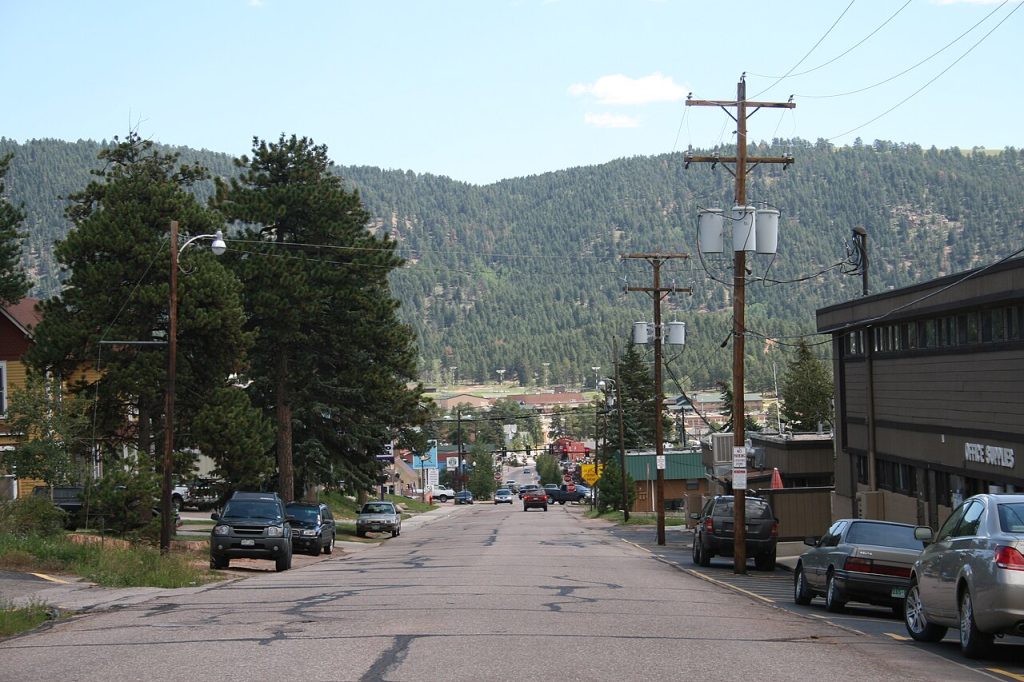
After a morning on the water, Woodland Park’s small but genuinely good dining scene is right down the road. Grab a table somewhere on Midland Avenue, let your waders dry on the truck bed, and replay every cast over a hot meal. That is the Woodland Park rhythm, and once you find it, you will be back before the season turns.