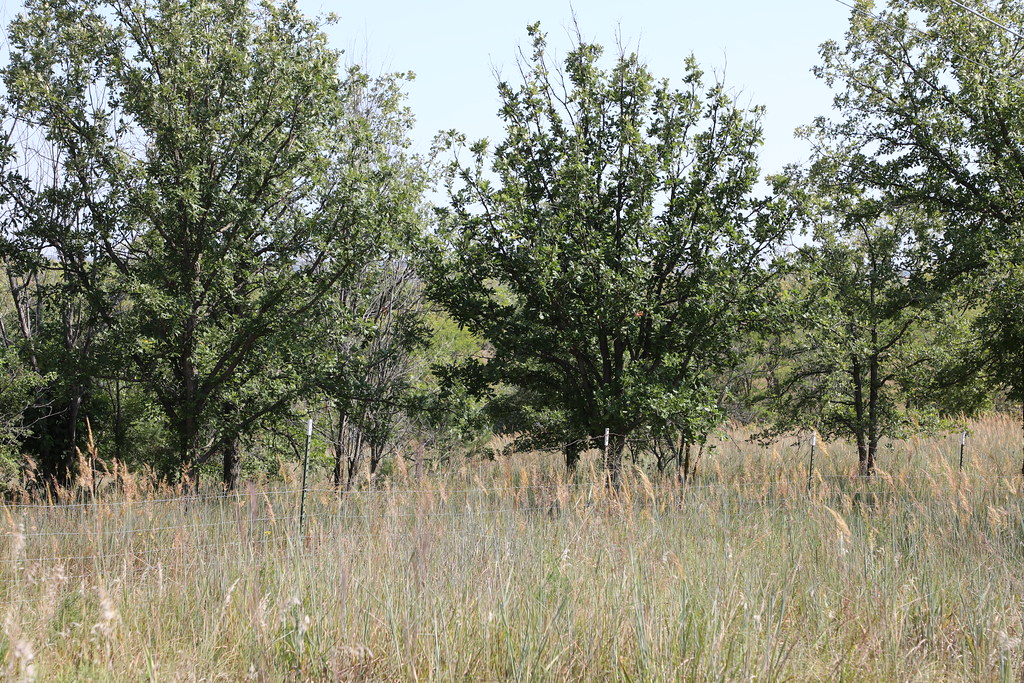
There is a particular kind of quiet that settles over you the moment you step off the gravel parking area at Nine-Mile Prairie, located about nine miles northwest of downtown Lincoln along West Fletcher Avenue. It is not the silence of absence — it is the silence of a landscape that has been doing its own thing, unbothered, for thousands of years. Standing at the trailhead with big bluestem grass swaying at shoulder height and a red-tailed hawk riding a thermal overhead, you start to understand why people drive from across the Midwest just to walk these 230 acres.
Nine-Mile Prairie is one of the largest remaining tracts of virgin tallgrass prairie in Nebraska, owned and managed by the University of Nebraska-Lincoln. That word “virgin” is not marketing language — this land has never been broken by a plow. The root systems beneath your feet are ancient and extraordinarily deep, some stretching ten or twelve feet into the earth, which is exactly why tallgrass prairie is one of the rarest ecosystems in North America. Less than four percent of the original tallgrass prairie that once blanketed the Great Plains still exists. You are walking on living history every time you visit.
The trail system is modest and accessible — a network of mowed paths that loop through the prairie, totaling roughly three miles in various combinations. There are no crowds, no admission fees, and no gift shop. What you do get is an ever-changing canvas depending on the season. Come in late May and you will find wildflowers — pale purple coneflowers, golden Alexanders, and wild indigo dotting the hillsides. Return in July and August and the grasses have risen to their full, dramatic height, turning the whole landscape into something that feels genuinely cinematic. By October, the prairie glows in warm amber and copper tones that rival any fall foliage you have seen in wooded country.
Birders hold this place in especially high regard. The prairie hosts bobolinks, dickcissels, upland sandpipers, and a rotating cast of raptors throughout the year. Bring binoculars and a field guide, and you will not be disappointed. Photographers also find Nine-Mile Prairie endlessly rewarding — the light here in the early morning and late afternoon has a golden, diffuse quality that makes even casual snapshots look thoughtful.
University of Nebraska researchers use the prairie for ongoing ecological studies, which means the land is carefully managed with periodic prescribed burns that keep invasive species at bay and stimulate native plant growth. You may notice sections in various stages of post-burn recovery, and watching those patches green up and bloom through the seasons is its own kind of reward.
Dogs are welcome on leash, and the terrain is gentle enough for most fitness levels. Pack water, wear sunscreen, and give yourself at least ninety minutes to walk slowly and actually look at things. Nine-Mile Prairie rewards patience. It is not a destination built around doing — it is built around noticing. And in a world that rarely slows down long enough for that, it turns out to be exactly what a lot of people need.
From Lincoln’s Haymarket district, the drive takes about fifteen minutes. Head northwest on West O Street, continue onto West Fletcher Avenue, and watch for the modest brown sign on your right. It is an understated entrance for one of the most remarkable places in the entire state.