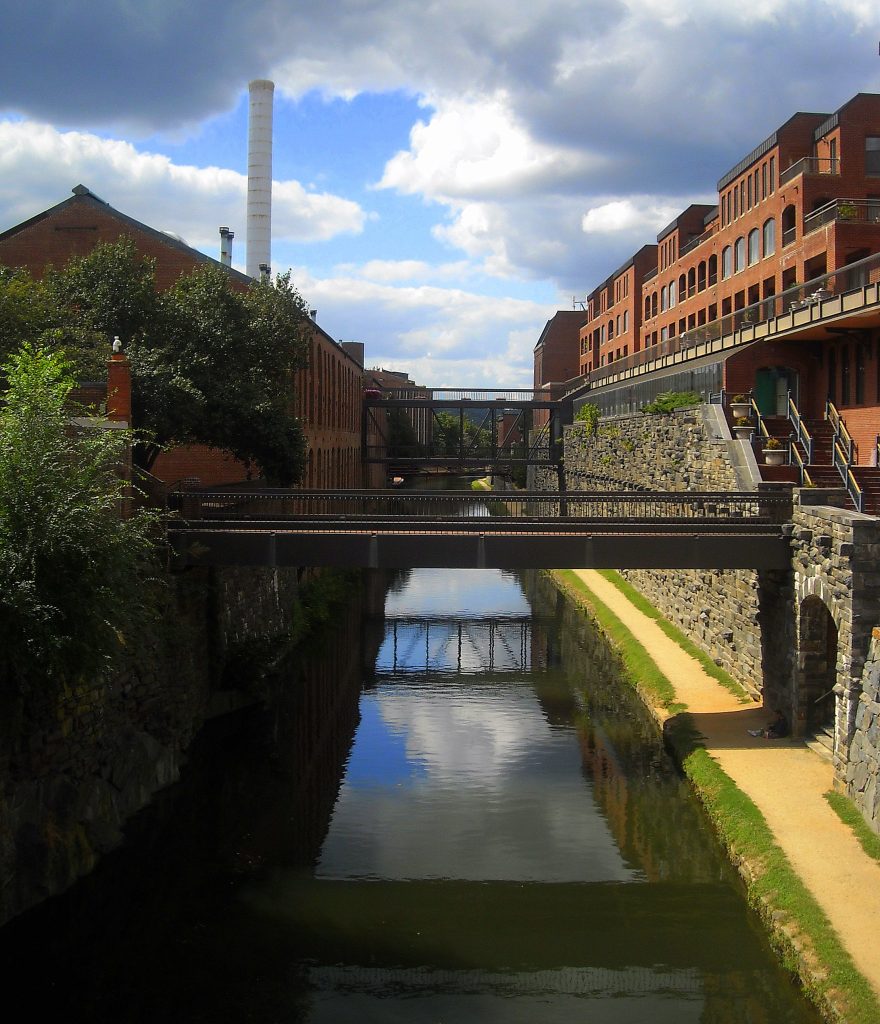
There is a particular kind of morning magic that happens along the C&O Canal towpath in Georgetown, and once you experience it, you will find yourself scheming to get back. The light filters through the sycamores in long golden strips, the canal water sits perfectly still, and the whole place feels like a living postcard from a Washington that most tourists never find. This is the C&O Canal National Historical Park, and it is, without question, one of the most rewarding places to spend a few unhurried hours in the District.
The canal stretches an extraordinary 184.5 miles from Georgetown all the way to Cumberland, Maryland, tracing the north bank of the Potomac River. You do not have to hike anywhere near all of it to feel its power. Even a short stroll along the flat, crushed-stone towpath in Georgetown — say, from the Thomas Jefferson Street entrance toward Fletcher’s Cove — rewards you with an entirely different Washington than the one framed by marble monuments and gridlocked traffic circles. Here, the city exhales.
The history layered into this place is remarkable. Built between 1828 and 1850, the canal was a commercial lifeline, carrying coal, timber, and grain east from the Appalachian interior aboard mule-drawn canal boats. At its peak, more than 500 boats worked these waters. By the time the railroad rendered it obsolete, it had already shaped the economic character of the entire region. When the National Park Service took stewardship, they preserved not just the waterway but a world — lockhouses, lift locks, aqueducts, and the occasional remnant of a bygone industrial America that feels both intimate and enormous.
If you visit between late spring and early fall, make a point of catching a mule-drawn canal boat demonstration at the Georgetown visitor center. Park rangers in period dress guide visitors through the lock system exactly as boatmen did in the 1870s, and somehow it never feels gimmicky. It feels essential. Children are absolutely transfixed, and frankly, so are most adults.
For those who want to go farther, the towpath is ideal for cycling. Rent a bike from one of the shops just outside Georgetown and follow the path north toward Great Falls, where the Potomac narrows dramatically and crashes over ancient rock in a display that is genuinely awe-inspiring. The round trip from Georgetown to Great Falls Tavern is roughly 15 miles and well within reach of a casual rider.
Pack a lunch. Bring good shoes. Come in spring when the wildflowers line the towpath edges, or in October when the canopy turns copper and rust. Any season works, honestly, because the canal has a way of being exactly what you need it to be. Quiet when you need quiet, dramatic when you need drama.
The Georgetown entrance sits just off M Street NW, steps from the restaurants and boutiques of one of D.C.’s most vibrant neighborhoods, which means you can fold a canal walk into a full and satisfying day with very little planning. That combination — serious history, genuine natural beauty, and easy urban access — is rarer than it sounds, and the C&O Canal pulls it off effortlessly.