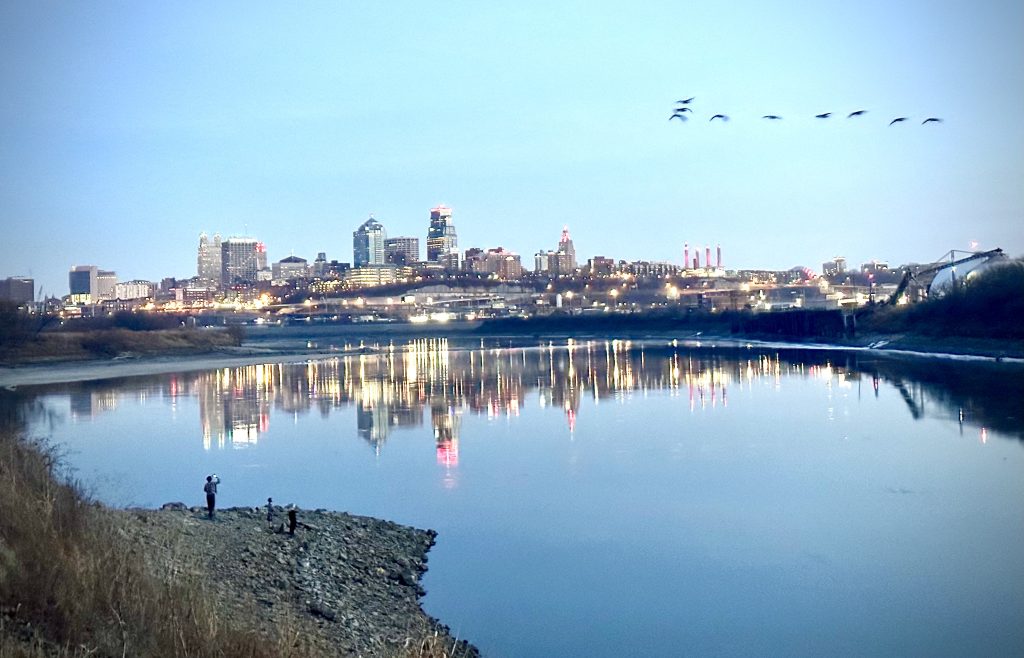
There is a place at the very tip of Kansas City where two great rivers meet, where the muddy Kansas River — known to native peoples as the Kaw — flows into the even muddier Missouri, and where the silence is so complete on a weekday morning that you can hear the current pushing against the bank. That place is Kaw Point Park, and it just might be the most historically loaded patch of ground in the entire city.
Tucked into the industrial West Bottoms neighborhood, Kaw Point sits at the confluence of the two rivers and marks the spot where the Lewis and Clark Expedition camped for two nights in June of 1804. Let that sink in for a moment. Lewis, Clark, Sacagawea’s future companions, and the entire Corps of Discovery rested right here, looking out at almost exactly the same view you will see when you walk to the end of the observation platform. The Missouri still rolls wide and brown. The treeline on the far bank still looks wild and unhurried. Standing there, it feels less like a city park and more like a portal.
Getting there requires a short drive through a part of Kansas City most visitors never see — past rail yards, industrial warehouses, and the occasional freight truck — which only adds to the sense that you are finding something real and unpolished. The park itself is maintained by the City of Kansas City and the Army Corps of Engineers, and while it is not a manicured garden, that is precisely the point. A gravel path winds down from the small parking area through native plantings and interpretive signage that tells the story of the confluence, the Kaw Nation, and the Corps of Discovery in clear, engaging language. The panels are genuinely worth reading; you will leave knowing something you did not know before.
The observation deck extending over the confluence is the emotional centerpiece of the visit. On clear days, you can see for miles up both river channels, and in the early morning or late afternoon, the light on the water is extraordinary. Photographers make the trip specifically for golden-hour shots of the confluence, and birders come for the migratory species that follow the river corridors. Great blue herons are practically residents.
Kaw Point is free to visit and open during daylight hours. It pairs beautifully with a stop at the nearby River Market neighborhood or a meal in the West Bottoms on a First Friday event weekend. Bring comfortable shoes, a water bottle, and maybe a little patience for the industrial approach drive. What waits at the end of it is genuinely moving — a quiet, powerful reminder that Kansas City was born at this very spot, at the meeting of two rivers, at the edge of a continent waiting to be crossed.
If you have lived in Kansas City for years and have never made the trip, this is your nudge. Go on a weekday morning, bring your coffee, and give yourself an hour. You will not regret it.