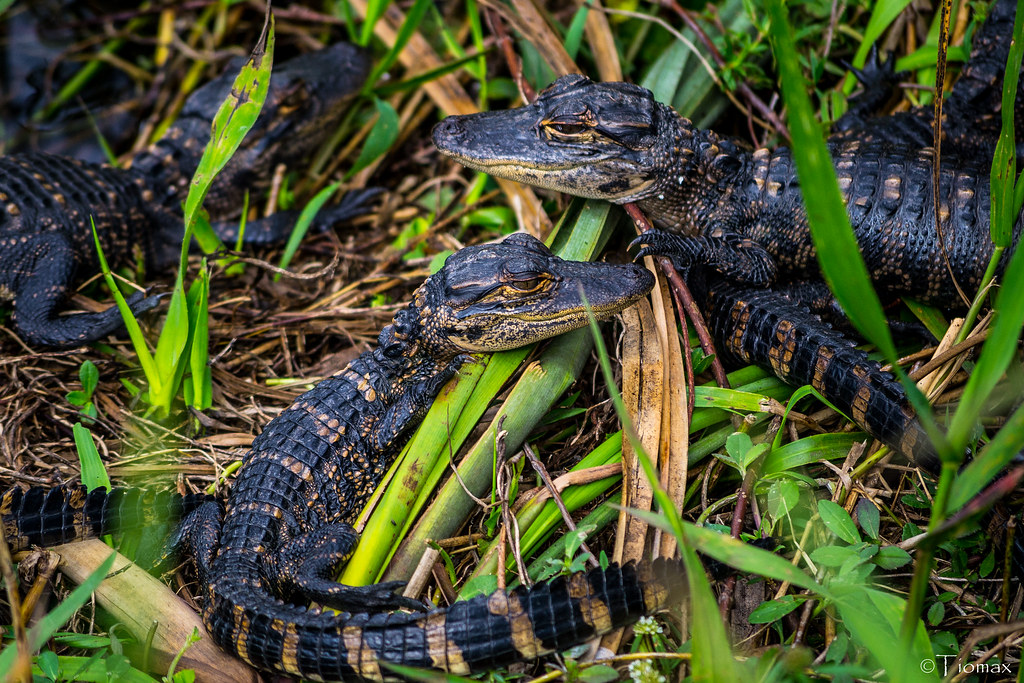
There is a moment, about three miles into the Shark Valley loop, when the saw grass stretches so far in every direction that the Miami skyline feels like something you imagined. A great blue heron stands motionless at the edge of a canal. An anhinga spreads its wings on a cypress knee, drying off after a dive. And then, sliding silently off a muddy bank and into the water not twenty feet from you, an American alligator the size of a dining room table simply goes about its morning. You are firmly, wonderfully, not in a city anymore.
Shark Valley sits at the northern edge of Everglades National Park, tucked just off the Tamiami Trail (US-41) about an hour’s drive west of downtown Miami. Despite its dramatic name, there are no sharks here — the “valley” refers to a broad, shallow river of grass that flows southward toward Florida Bay, and the sharks are the ones historically caught at its mouth. What you will find is one of the most accessible wild experiences anywhere in South Florida, and that accessibility is precisely what makes it so extraordinary.
The centerpiece of any visit is the 15-mile paved loop road that winds through the heart of the wetlands. You have three options: rent a bicycle at the park’s concession stand, hop on a two-hour tram tour led by a knowledgeable ranger, or simply lace up your walking shoes and go. Cyclists tend to get the best of it — the terrain is flat, the breeze off the grass keeps things comfortable in the morning hours, and you can stop as often as you like, which you will, because the wildlife around every bend demands it.
Halfway around the loop stands the Shark Valley Observation Tower, a spiral ramp that rises 65 feet above the ground. Climbing it feels slightly absurd until you step onto the top platform and the full Everglades panorama opens up around you — an endless, shimmering green broken only by tree islands and the silver thread of water below. On a clear winter morning, you can see for miles in every direction. Bring your binoculars. Bring your camera. Take your time.
The best months to visit run from November through March, when temperatures are mild, the afternoon thunderstorms have eased off, and wildlife concentrates around the dwindling water sources in the dry season. Arrive early — the gates open at 8:30 a.m. — and you will have the cooler air and the calmest light to yourself before the tram tours fill in around mid-morning.
Admission is modest, parking is straightforward, and the park concession rents bikes by the hour at reasonable rates. There is a small visitor center near the entrance where rangers answer questions with genuine enthusiasm, and a shaded picnic area if you want to linger over lunch before heading back toward the highway and the city that feels, for a little while, entirely forgotten.
Shark Valley is not a hidden gem in the Instagram sense — it is a legitimate national park and draws visitors year-round for good reason. But among Miami residents, it is surprisingly undervisited, treated as a trip “we should do sometime” that gets postponed in favor of beach weekends. Do not let it stay on your someday list. Drive the Tamiami Trail on a Tuesday morning, rent a bike, and spend three hours in one of the most remarkable ecosystems on the planet. The alligators will be there. The herons will be there. And the saw grass will stretch out in every direction, indifferent to everything, exactly as it has for thousands of years.