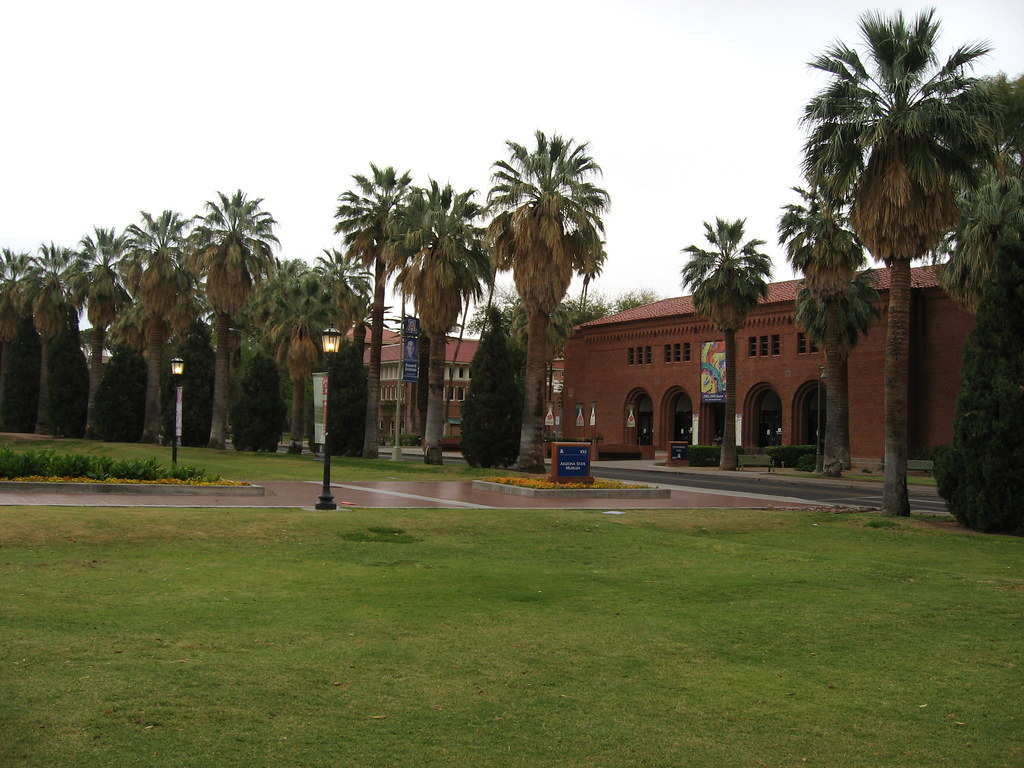
There is a moment, about ten minutes into a visit to the Arizona State Museum on the University of Arizona campus, when the noise of the outside world simply falls away. You are standing in front of a floor-to-ceiling display of pottery vessels — some over a thousand years old — each one painted with geometric patterns so precise, so confident, that you find yourself wondering about the hands that shaped them. That is the quiet magic of this place, and it gets under your skin fast.
The Arizona State Museum is the oldest and largest anthropology museum in the American Southwest, and it sits right in the heart of the UA campus in central Tucson, just a short walk from the main University Boulevard entrance. Admission is modest, parking is available nearby, and the whole experience carries none of the hustle you might expect from a major institution. This is a place people linger, not rush through.
The crown jewel of the museum is the permanent exhibition called Paths of Life: American Indians of the Southwest and Northern Mexico. It traces the living cultures of ten Indigenous peoples across the region — including the Tohono O’odham, the Hopi, the Yaqui, and the Navajo — through objects, photographs, oral histories, and hands-on displays. What sets this exhibition apart from a typical natural history presentation is its insistence on the present tense. These are not vanished civilizations on display. These are communities with active cultural lives, ongoing traditions, and a direct relationship with the items you are looking at. That distinction matters enormously, and the museum makes it impossible to miss.
The pottery collection deserves its own paragraph, honestly. The Ceramic Repository here holds one of the largest collections of Southwest Indigenous pottery in the world — over 20,000 vessels and sherds — and a rotating selection is always on view. Seeing Hohokam red-on-buff work alongside contemporary Tohono O’odham basketry in the same gallery creates a sense of unbroken continuity that no textbook can replicate.
The museum also hosts regular lectures, community events, and rotating special exhibitions that pull from its vast archive of photographs, textiles, and archaeological materials. Check the calendar before you go, because stumbling into a gallery talk led by a tribal scholar or a visiting archaeologist is exactly the kind of unplanned highlight that makes a Tucson day genuinely memorable.
If you come to Tucson curious about the deep human story of this landscape — who was here, how they lived, and how those cultures pulse forward into the present — the Arizona State Museum will answer your questions and raise about a dozen more. Plan on two hours. You will want every minute of them.