What does it mean to watch a craft survive? That question tends to surface naturally around the Philip Simmons Garden and Smithy, a small but quietly remarkable site on Blake Street in the upper reaches of the Peninsula, in a part of Charleston that most visitors never reach.
Philip Simmons was an ironworker, born on Daniel Island in 1912, who spent roughly seven decades shaping wrought iron gates, fences, and ornamental grillwork across the city. His work appears on perhaps two hundred properties in Charleston — the snake gate on Lowndes Grove Road, the star-and-fish gate behind St. Michael’s Episcopal Church, the heart gate on the grounds of the Heyward-Washington House, among many others. He didn’t just practice a trade; he preserved an Afro-Caribbean blacksmithing tradition that had largely died out everywhere else. When Simmons passed in 2009 at ninety-six, he was a National Heritage Fellow and something close to a civic institution.
The smithy itself sits behind the Neighborhood Center on Blake Street, in an area of the upper Peninsula that still carries the texture of a working neighborhood rather than a tourist corridor. It’s not polished. That’s part of the point. The forge, the anvil, the hand tools — they aren’t arranged for spectacle. They’re arranged for use, because apprentice smiths still work there, learning the same hammer techniques Simmons refined over a lifetime. On days when a smith is in, the sound carries into the garden: a low, rhythmic clang that you don’t hear much of anywhere anymore.
The garden adjacent to the smithy is modest — raised beds, shade trees, a few benches — but it’s cared for with the same quiet intentionality as the ironwork itself. Local volunteers and community members maintain it. There’s none of the manicured perfection of a formal Charleston garden here, and that’s what makes it feel inhabited rather than preserved behind glass.
Admission is generally free, though donations support ongoing preservation efforts. Hours can vary depending on programming and community events, so a quick call ahead to the Neighborhood Center is worthwhile before making a special trip. The site is not heavily staffed or promoted, which means it draws people who actually want to be there — historians, ironwork enthusiasts, neighborhood residents, and a steady trickle of visitors who’ve seen a Simmons gate on a walking tour and wanted to understand where it came from.
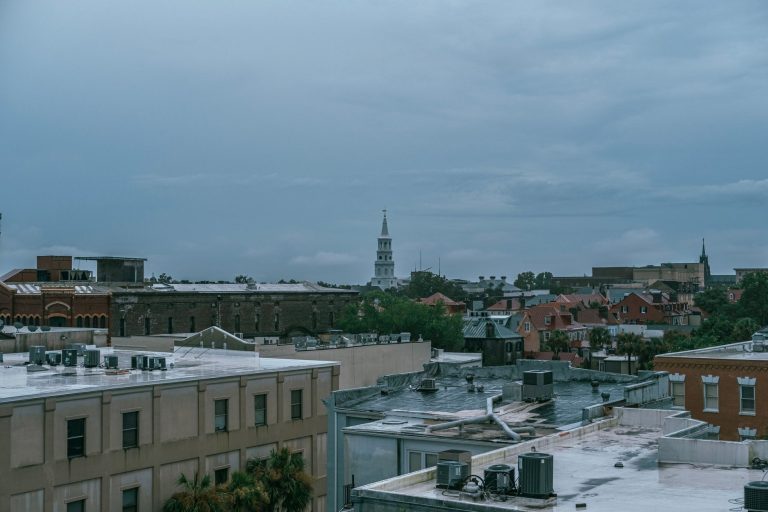
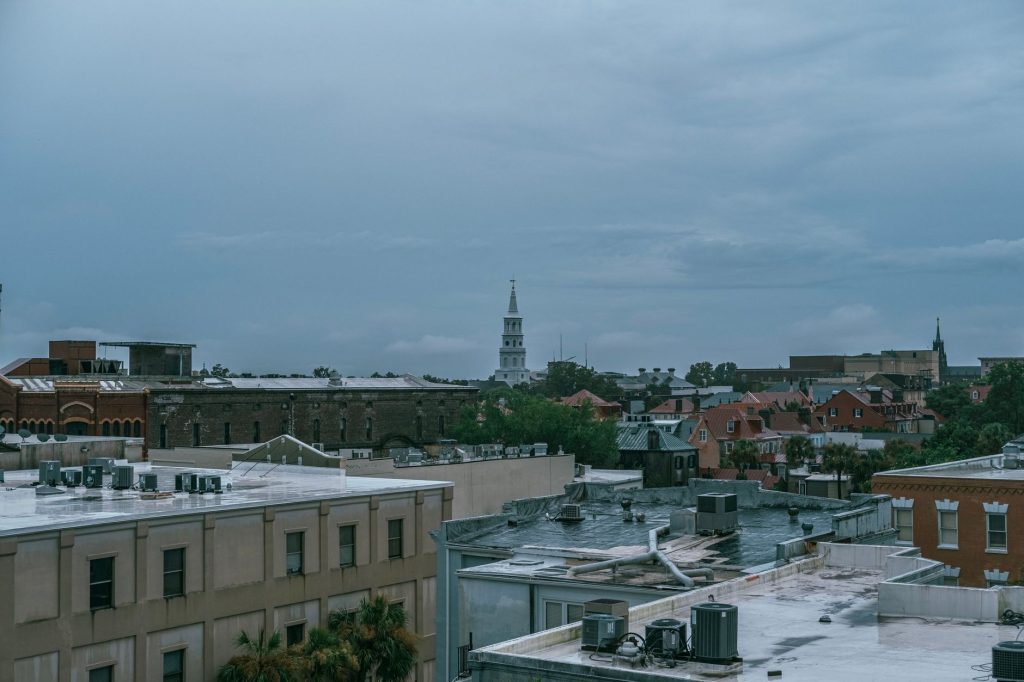
The surrounding blocks of the upper Peninsula reward a short walk. This part of Charleston — sometimes called the Neck — has a different feel from the lower Peninsula’s well-trod streets. Corner stores, churches, longtime residents on front porches. It’s a part of the city with its own distinct history, much of it tied to the free Black and Gullah-Geechee communities who shaped Charleston’s craftwork and culture for generations.
Simmons’s gates are scattered across the whole city, but the smithy is where the story actually lives — in the heat of the forge, in the apprentices still learning, in a garden that grows because people show up to tend it. For anyone genuinely curious about Charleston’s material culture and not just its architecture, this is where to start.