Can you really drive to a functioning ghost town from downtown Missoula in under two hours? Yes, and on a clear morning with the Blackfoot Valley spread out below you and nobody else on the road, it feels almost implausible that more people aren’t doing exactly this.
Garnet Ghost Town sits about 30 miles east of Missoula off Highway 200, then another ten miles up a dirt road that the Bureau of Land Management maintains — though “maintains” is doing some work there. A high-clearance vehicle is strongly recommended, especially in spring when the road goes soft. In winter, the last stretch is closed to cars entirely, but snowmobilers and skiers come in on their own terms. Most people visit May through October, when the site is staffed and the cabins are open for self-guided exploration.
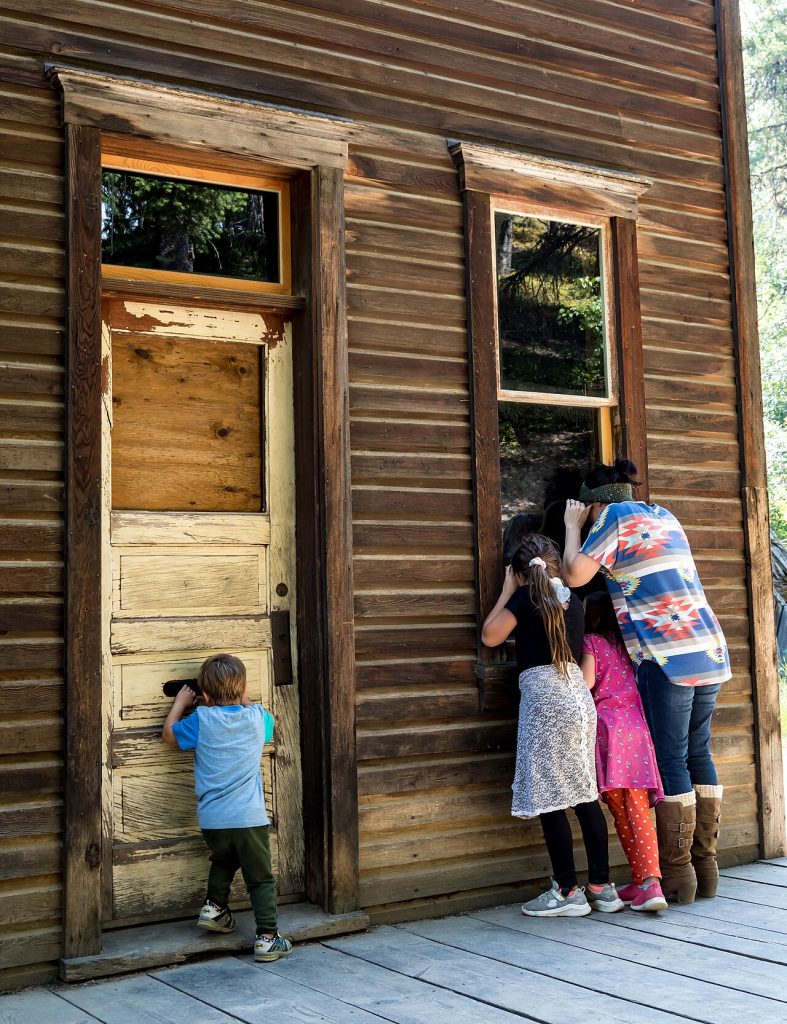
What you find when you get there is not a reconstruction or a museum diorama. Garnet is one of the best-preserved ghost towns in Montana — about 30 structures still standing, most of them original, none of them roped off behind velvet barriers. You can walk into the old hotel, step through the remains of a miner’s cabin, look up through a collapsed roof at actual sky. The place peaked in the 1890s during a gold rush and again around World War I; at its height, nearly a thousand people lived here. By the 1940s, it was finished. What’s left has been stabilized rather than restored, which means it feels genuinely abandoned rather than performed.
The BLM staffs the site in summer with interpretive rangers who are worth talking to if you have questions, but the experience is mostly self-directed. There’s a small fee — a few dollars per vehicle, reasonable by any standard — and a modest visitor cabin with maps and historical context. Plan on two to three hours minimum if you want to poke around properly. Bring water; there’s nothing to buy up there.
One reason Garnet stands out against other Montana ghost towns is the elevation — around 6,000 feet — and the surrounding forest. The trees have grown back over what was once a stripped and busy mining district, so the buildings emerge from timber in a way that photographs can’t quite capture. On an overcast day, the whole place has a specific atmosphere that’s hard to name but easy to remember.
If you’re going with kids, they tend to do well here. There’s enough that’s tangible and climbable (use common sense; these are genuinely old structures) to hold attention, and the drive itself through the Blackfoot corridor is worth doing for its own sake. You might see elk. You’ll definitely see the kind of open country that reminds you why people moved to western Montana in the first place.
A practical note: cell service disappears well before you reach the site. Download the BLM map ahead of time, or just print one. The road signs are adequate but the turns are easy to second-guess. Leave early if you want the place to yourself — by early afternoon on a summer weekend, the parking area fills in. Mornings belong to the serious visitors, and Garnet rewards that kind of attention.