What does a Hartford flea market look like in 2024? The answer, on a Saturday morning along New Park Avenue in the Parkville neighborhood, turns out to be considerably more interesting than most people expect before they arrive.
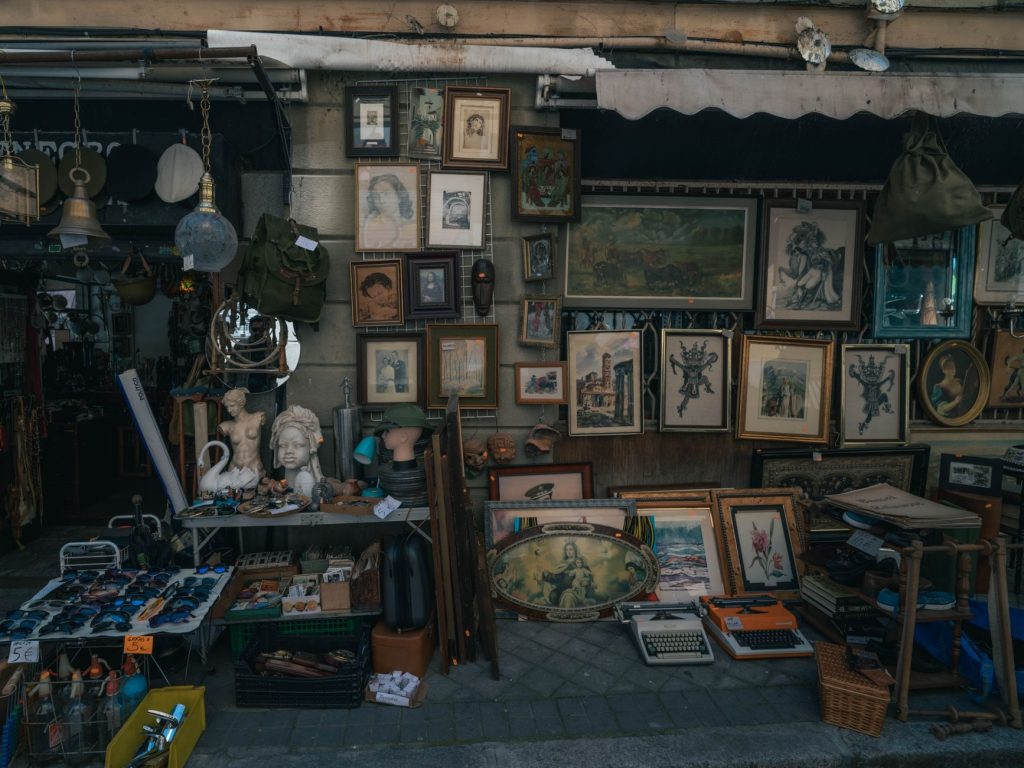
The Parkville Flea Market runs on weekends in the warmer months, typically April through October, drawing a sprawling cross-section of Hartford that rarely gathers in one place otherwise. The lot near the old Mosaic Tile building fills early — dealers set up by 7 a.m., and the serious pickers are already circling by 8. Families push strollers past folding tables loaded with everything from mid-century ceramics to power tools still in their original packaging. A guy selling bootleg incense burns beside a woman who does nothing but vintage denim. Neither seems bothered by the other.
The inventory shifts week to week, which is part of why regulars keep coming back. On any given morning there might be a table of Dominican and Puerto Rican kitchen goods — pilón sets, cast aluminum calderos, dried peppers in sealed bags — stationed next to someone offloading an entire estate of mid-century woodworking tools. The eclecticism isn’t curated. It’s just what accumulates when a working-class city sends its surplus goods to one place.
Prices run the gamut. A chipped but usable cast-iron skillet might go for three dollars. Jewelry is negotiable almost everywhere. The sellers who’ve been coming for years know their clientele and don’t inflate; the newer vendors sometimes start high and come down fast if they sense disinterest. Cash is king, though a few tables now accept Venmo.
The market’s position inside the Parkville Arts District adds an unusual texture. The neighborhood has been quietly building itself up for a decade — studios, small fabricators, a few galleries — and the weekend market pulls the district’s identity in two directions at once: gritty swap meet on one hand, emerging creative neighborhood on the other. On a busy Saturday both things are true simultaneously, and nobody seems to find that contradictory.
Food vendors work the edges of the lot. Puerto Rican pasteles, tostones wrapped in foil, cups of fresh-cut fruit with tajín — there’s usually enough to make a passable lunch without planning ahead. The coffee, poured from an urn at a folding table near the entrance, is basic drip and it costs a dollar. Nobody complains.
Parking can get tight after 9 on a good-weather Saturday. The smart move is to come early, walk the full perimeter before committing to anything, and double back. Sellers rarely pack up before noon, and items don’t disappear as fast as they do at more heavily trafficked markets in other cities. There’s a patience to the place that feels distinctly Hartford — unhurried, straightforward, not performing for anyone.
Entry is free. Whatever gets spent inside stays almost entirely with individual sellers rather than a single operator. For a city that sometimes struggles to generate casual, accessible public gathering, the Parkville Flea Market does the job without making a fuss about it.