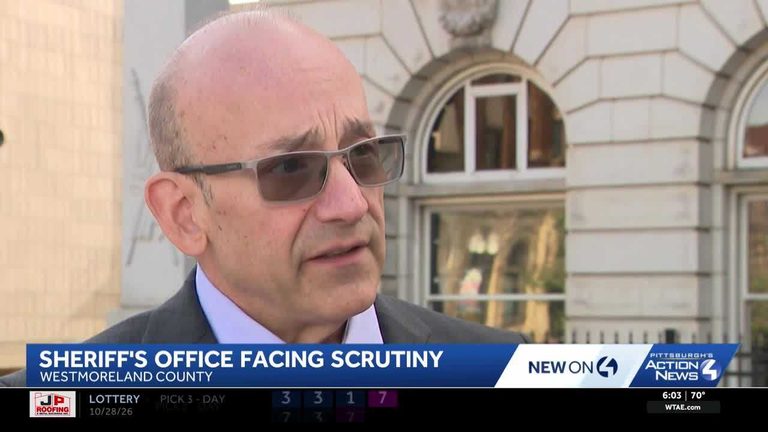
Westmoreland County officials are locked in a public dispute over core public‑safety functions. Commissioner Sean Kertes warned that the sheriff’s office appears to be either mismanaging its duties or covering up errors after a temporary suspension of arrest‑warrant service and multiple wrongful arrests.
Judge Orders Immediate Resumption of Warrants
County Common Pleas Judge Christopher Feliciani issued a stern letter demanding that Sheriff James Albert reinstate the service of arrest warrants without delay. The judge emphasized that warrant execution is a fundamental public‑safety responsibility, not a convenience that can be paused indefinitely. “An arrest warrant represents a judicial determination that legal grounds exist for an individual’s arrest,” the letter read. “Failure to execute those warrants undermines public confidence in the justice system.”
Wrongful Arrests Highlight Operational Gaps
In September, Larry Miller Jr. was mistakenly arrested while attending a hearing at the Westmoreland County Courthouse. Commissioner Doug Chew noted that this was not an isolated incident, citing another case in which a man from Philadelphia was mistakenly transported to Westmoreland and briefly detained. The sheriff’s office clarified that it was not the arresting agency in the Philadelphia case but had provided transport after the original arresting agency mistakenly combined the suspect’s information with that of the actual warrant subject.
Both incidents have raised concerns about taxpayer dollars being wasted on avoidable errors. “It’s not one time that a person ended up in prison. It’s now twice,” Chew said, urging the sheriff to address the systemic issues.
Sheriff Pushes Forward With K‑9 Unit
Despite the controversy, Sheriff Albert announced plans to launch a K‑9 program on October 28, 2026. In a letter to the commissioners, he argued that the unit would enhance deputy safety, assist local police departments, and provide peace of mind to Westmoreland residents. Albert claimed the K‑9, named Makro, had already completed $50,000 of military training and that the handler, Josh, had incurred personal costs exceeding $10,800 to keep the dog’s training current.
The sheriff asserted that a memorandum of understanding (MOU) was unnecessary, noting that other counties have started similar programs without formal agreements. He also emphasized his statutory authority as a constitutionally elected official to operate his office without undue interference.
Commissioners Respond With Proposals
Commissioners have not accepted the sheriff’s unilateral approach. Kertes suggested a compromise: a part‑time position for the K‑9 handler and the involvement of a third‑party certified head to oversee both part‑time and full‑time duties. He also raised concerns that the proposed program conflicts with the existing deputies’ union contract, which contains no language addressing a K‑9 unit.
Chew added that the sheriff has repeatedly failed to provide the commission with necessary information, making it difficult for the board to negotiate effectively. Nonetheless, the commissioners expressed a willingness to work toward a resolution, stating they are not trying to “play hardball” but simply seeking a workable solution.
Next Steps
The county court’s directive to resume warrant service is expected to be acted upon immediately. Meanwhile, the commission plans to continue negotiations with the sheriff’s office regarding the K‑9 program, aiming to align the initiative with contractual obligations and fiscal responsibility.
Original reporting: WTAE (Hearst) – local — read the source article.