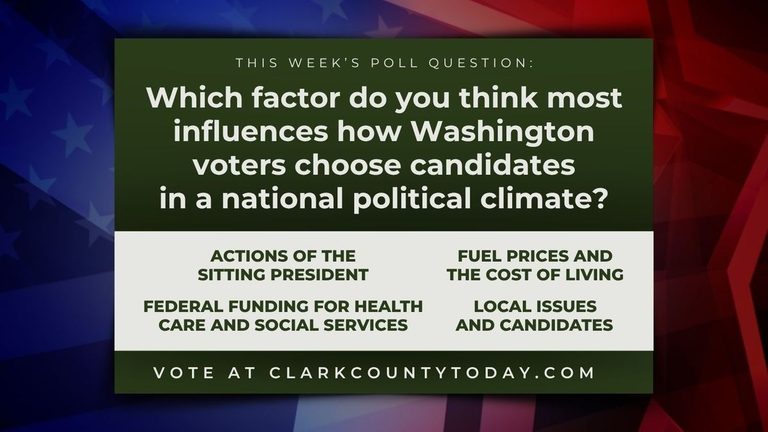
As Washington state experiences what local observers describe as a “blue wave,” a fresh poll seeks to understand how national developments influence voter decisions. The survey, conducted in the wake of a Democratic push toward a supermajority in the state House and a narrow Republican lead in the 5th Congressional District, asks respondents to identify the single factor that most shapes their choices at the ballot box.
Poll Context and Key Findings
The poll frames its question around the broader political climate shaped by the second term of President Trump. Respondents are prompted to consider a range of issues that defined that period, including the conflict in Iran, rising gasoline and diesel prices, tariff policies, and reduced federal assistance for health care and social programs. While the poll does not disclose specific percentages for each option, it highlights that Washington voters are actively evaluating how these national dynamics intersect with local concerns.
State Election Landscape
Recent election results underscore the significance of the poll’s timing. Democrats have moved closer to securing a supermajority in the Washington House of Representatives, a development that could reshape legislative priorities on education, transportation, and public safety. Meanwhile, Democratic U.S. Representative Marie Gluesenkamp Perez expanded her margin of victory, reinforcing the party’s momentum in the western part of the state.
In the 5th Congressional District, a Republican incumbent maintains a slim lead, illustrating the competitive nature of many races across Washington. These outcomes suggest that voters are weighing both local candidate qualities and the impact of national policies on their daily lives.
National Issues Cited by Voters
Among the national issues highlighted, the poll references the war in Iran, which many voters view as a test of U.S. foreign‑policy resolve. Rising fuel costs have also been a prominent concern, affecting commuting expenses and the cost of goods. Tariff measures, introduced during the Trump administration, continue to influence discussions about trade and the price of consumer products. Finally, the reduction in federal aid for health care and social services remains a point of debate, especially in communities that rely on such programs.
Why the Poll Matters for Washington Residents
Understanding which of these factors resonates most with voters can help candidates tailor their messages to address the issues that matter most to constituents. For example, a candidate emphasizing energy independence may find traction among voters concerned about fuel prices, while another focusing on expanding state‑level health initiatives could appeal to those feeling the pinch of reduced federal support.
Local leaders and community organizations are also watching the poll results closely. By gauging public sentiment, they can better advocate for policies that align with the priorities of Washington families, churches, and businesses.
Looking Ahead
The poll’s findings will likely inform campaign strategies as Washington heads into the next election cycle. As the state continues to experience demographic shifts and evolving economic conditions, the interplay between national policy and local voter preferences will remain a critical factor in shaping the political landscape.
Readers interested in participating in future surveys or learning more about the current poll can visit the Clark County Today website for additional details.
Original reporting: Clark County Today (Vancouver WA) — read the source article.