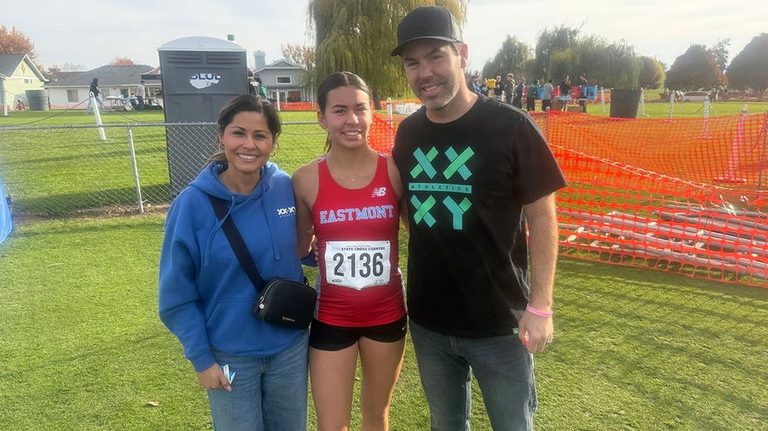
Eastmont High junior Ahnaleigh Wilson entered the 4A girls state cross‑country championship at Sun Willows Golf Course determined to finish, even though a bone‑stress injury in her right fibula threatened to become a fracture. Wilson, who has become a vocal advocate for biological separation in girls’ sports, was paired against a male runner from Camas High who switched to the girls team mid‑season.
Background and the policy fight
Wilson first entered the public eye more than two years ago when she finished second to a transgender athlete in a Junior Olympic track race. Since then she has spoken out against biological boys competing in girls’ events, a stance that drew a public rebuke from Seattle Storm co‑owner Celeste Keaton, who cursed her at a WNBA game for holding a sign supporting pro‑life advocate Sophie Cunningham.
In November, Washington voters approved Initiative 638, a ballot measure that will require K‑12 schools to separate biological boys and girls in athletic competition once it takes effect, potentially as early as December 3. The measure passed with a decisive margin, reflecting widespread concern among parents and athletes about fairness in school sports.
The state championship race
Wilson’s usual 5,000‑meter time is around 19:30, which would typically place her in the top third of the 155‑girl field. Because of her injury, however, she ran a slower 22:58.30, finishing 150th. The Camas male runner, who had previously placed 76th in a boys’ JV race before switching, finished 23rd, missing the top‑16 podium.
Despite the physical pain, Wilson said the cheers from strangers in the crowd kept her moving forward. “There were a few times I didn’t know if I was going to finish, and I heard people I didn’t recognize their voices, but there were people cheering for me, and that was really cool,” she said.
Other athletes react
Skyview High junior Charlie Garrett and teammate Sierra Retzlaff walked off the start line in protest of the Camas runner last month. Garrett explained, “My motivation is that I don’t want my spot taken away by someone who shouldn’t be in my race.” Kamiakin High sophomore Lauren Baumann echoed the sentiment, saying, “I don’t think he should be racing in a girls race, and I’m glad he won’t be able to run next year.”
Family and community response
Wilson’s mother, Elizabeth, broke down in tears after the race, expressing both pride and concern for her daughter’s health. “I can’t believe she went out and did that with a bone stress… that’s just heart,” she said. X‑rays will determine whether Wilson’s injury has progressed to a stress fracture.
The race highlighted the real‑world impact of Initiative 638, as athletes and families across the state see the measure as a safeguard for fair competition. While legal challenges may delay implementation, many runners expressed relief that the initiative passed and hope that future races will be contested only by biological girls.
Looking ahead
Washington’s new policy could serve as a model for other states grappling with similar debates over transgender participation in school athletics. For Wilson, Garrett, Baumann, and countless other young athletes, the fight for biological fairness in sports continues, now bolstered by voter‑approved legislation.
Original reporting: Fox News (HLL/CB) — read the source article.