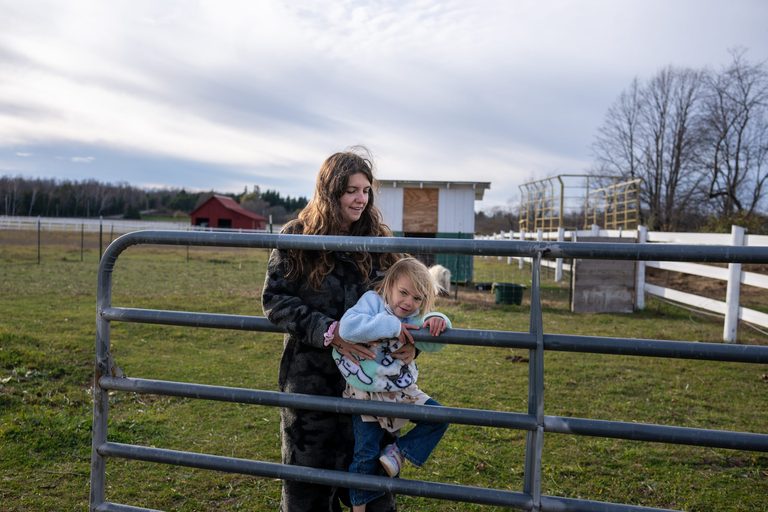
Six years ago Hannah Dusik returned to Washington Island, a remote community seven miles off Door County’s peninsula that can only be reached by a 30‑minute ferry. She and her husband bought a farmhouse on several acres, raised a hobby farm, and decided to homeschool their four children. “I feel like I’m living in a novel… It’s just slow. My kids are safe,” she said.
Homeschooling’s local footprint
Washington Island’s 800 residents host roughly 20 homeschool families, accounting for about one‑quarter of the island’s school‑age population. The public school district serves only 60 students, meaning each missing student reduces state funding that helps keep the school doors open.
Despite the financial tension, relationships between homeschooling families and the district remain cordial. Many homeschoolers still participate in school‑based extracurriculars and classes, and the district’s administrator, Tim Verboomen, notes that the community’s close ties keep interactions friendly.
Why families opt out of traditional schools
Parents cite a mix of practical and philosophical reasons. For Dusik, the freedom to shape her children’s education and the safety of a small‑town environment are paramount. “Kids deserve some sense of freedom, and homeschooling gives them a little bit of that,” she explained.
Cheyenne Watkins chose the island for its isolation, saying, “We wanted to be in a small town… this is as isolated as you’re gonna get.” Her decision is also driven by concerns that public‑school staff might discuss topics like gender in ways she disagrees with.
Marisa Kehren, a teacher‑turned‑homeschooler, values the ability to travel with her family while her husband’s FBI assignments take them across the country. She also appreciates the chance to teach her children the Bible and give individualized attention to her oldest child, who has Down syndrome.
All three families stress that homeschooling allows them to spend precious time together, a sentiment echoed by many island parents.
Community support and challenges
Homeschool families have built a strong support network. A single text‑messaging group keeps parents connected, and co‑ops—informal gatherings for shared classes and social activities—are common both on the island and across the state.
Island life, however, presents logistical hurdles. The grocery store closes early, ferry schedules are limited in winter, and medical appointments can consume an entire day. Yet residents pride themselves on neighborly assistance; Verboomen recalls how a passerby always has rope ready to pull a stranded driver out of a ditch during snowstorms.
Financially, each homeschooled student represents a loss of state aid for the district, prompting the school board to seek voter‑approved referendums to cover budget shortfalls.
Broader trends
Washington Island reflects a statewide surge in homeschooling. After a pandemic‑driven spike, the number of homeschooled students in Wisconsin has risen for three consecutive years, reaching its highest level since data collection began in 1984. Researchers at the Johns Hopkins Homeschool Research Lab note that homeschooling families now resemble the broader U.S. population in race, socioeconomic status, and geography, and their motivations are diverse—from safety concerns to cultural preservation.
While stereotypes persist, island parents assert that their children develop strong social skills through co‑ops and community activities. “It’s a lot of, ‘They’re gonna be weird or antisocial,’” said Watkins. “That’s definitely not the case.”
Original reporting: Wisconsin Watch — read the source article.