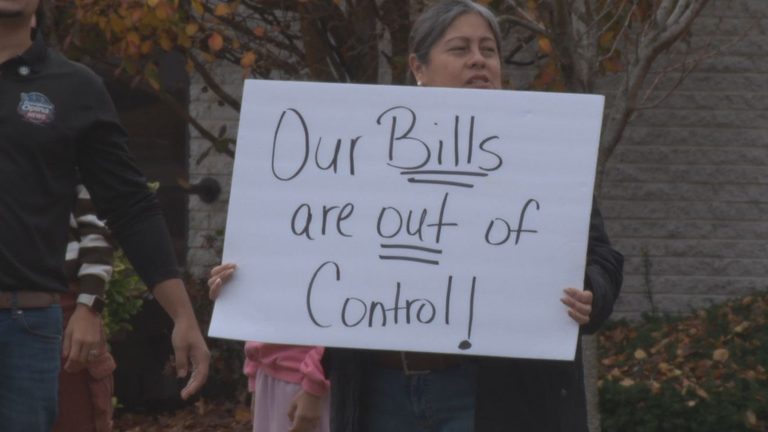
On Saturday afternoon, a group of concerned citizens assembled outside the Rhode Island Public Utilities Commission in Warwick to call for clearer information about the delivery fees charged by Rhode Island Energy. The protest highlighted the financial strain these fees place on families across the state.
Local voices raise concerns
Central Falls City Council member Laurilim Rosado spoke on behalf of the crowd, emphasizing the impact on households. “Our families are in need and deserve respect,” Rosado said. “We’re asking for questions, answering questions, and holding Rhode Island Energy accountable.”
Rosado recounted personal experience with the charges, noting that many families pay a modest amount for the electricity itself—often $50 to $60—while the delivery component can exceed $70. “Deciding, I feed my family or I pay the electric bill,” she explained, underscoring the difficult choices many face.
She also shared a troubling case involving her mother, who relies on an oxygen machine. After falling two months behind on payments, the power was shut off, leaving her mother without a critical medical device. “The delivery charges are too high to have her in the condition that she needs,” Rosado added.
Rhode Island Energy’s response
Representatives for Rhode Island Energy responded that delivery fees are necessary to “support the construction, maintenance and safe operation of critical infrastructure across Rhode Island.” The company pointed to the costs of power lines, storm cleanup, and essential equipment as the basis for the charges.
In addition, the utility announced that it will provide bill credits to some customers this winter, a measure intended to ease the immediate burden for those most affected.
What’s at stake for families
The protest reflects a broader concern among Rhode Island residents that utility costs are rising faster than the price of electricity itself. For many households, especially those with limited incomes or medical needs, the delivery component represents a significant portion of the monthly bill.
Local officials and consumer‑advocacy groups are urging the Public Utilities Commission to conduct a thorough review of the fee structure and to increase transparency so that customers can better understand how their money is being used.
Next steps
The Public Utilities Commission has scheduled a public hearing on the matter for next month, inviting both the utility and consumer representatives to present evidence and suggestions. Community members hope the hearing will lead to clearer billing practices and, if necessary, adjustments that protect vulnerable families.
As the discussion continues, Rhode Island Energy’s promise of winter bill credits offers short‑term relief, but many residents say lasting change will require a deeper look at how delivery fees are calculated and communicated.
Original reporting: NBC 10 WJAR (Sinclair) – local — read the source article.