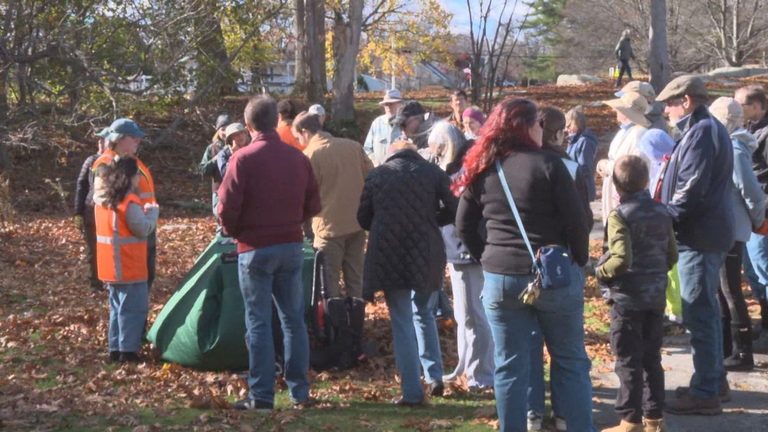
Warwick, R.I. — On a chilly November morning, the Rhode Island Department of Environmental Management (DEM) gathered community members at Salter Grove Memorial Park for a practical workshop on the spotted lanternfly, an invasive insect that threatens local farms and gardens.
Why the focus on egg masses?
According to DEM environmental scientist Cynthia Kwolek, the spotted lanternfly population has spread rapidly across the state since 2021, endangering vineyards, orchards and other agricultural crops. While adult insects are more visible, their egg masses—often hidden on tree trunks—are the key to long‑term control. “This time of year is probably the best time of year to scrape egg masses,” Kwolek explained, noting that colder temperatures keep adult lanternflies less active, making it easier to target the next generation.
Hands‑on training for residents
Workshop participants learned to identify the distinctive, brownish egg clusters and to remove them safely. Kwolek emphasized that simply knocking a mass off a tree is insufficient; the eggs must be crushed or otherwise destroyed to prevent hatching. “If you’re scraping them off the tree and they’re ending up on the ground, un‑popped, they could still hatch out the following spring,” she warned.
A female spotted lanternfly can lay up to 35 eggs in a single mass. Destroying one cluster can therefore stop dozens of nymphs from emerging the following year, a fact that resonated with attendees. Local resident Gavin Leeland, who frequently encounters the insects in his yard, said, “They look pretty, but that’s really the only thing they got going for them.”
Community impact and next steps
The DEM’s outreach aims to empower homeowners, gardeners and volunteers to take proactive steps in their own neighborhoods. By equipping residents with the knowledge to locate and eliminate egg masses, the agency hopes to curb the spread of the pest and protect Rhode Island’s agricultural heritage.
Kwolek expressed optimism about the community response. “It’s absolutely awesome to see everybody out here today,” she said, adding that continued citizen involvement will be crucial as the season progresses.
For those interested in future workshops or additional resources on invasive species management, DEM encourages contact through its website or local extension offices.
Original reporting: NBC 10 WJAR (Sinclair) – local — read the source article.